







Can a Desalination Plant Treat Brackish Water?
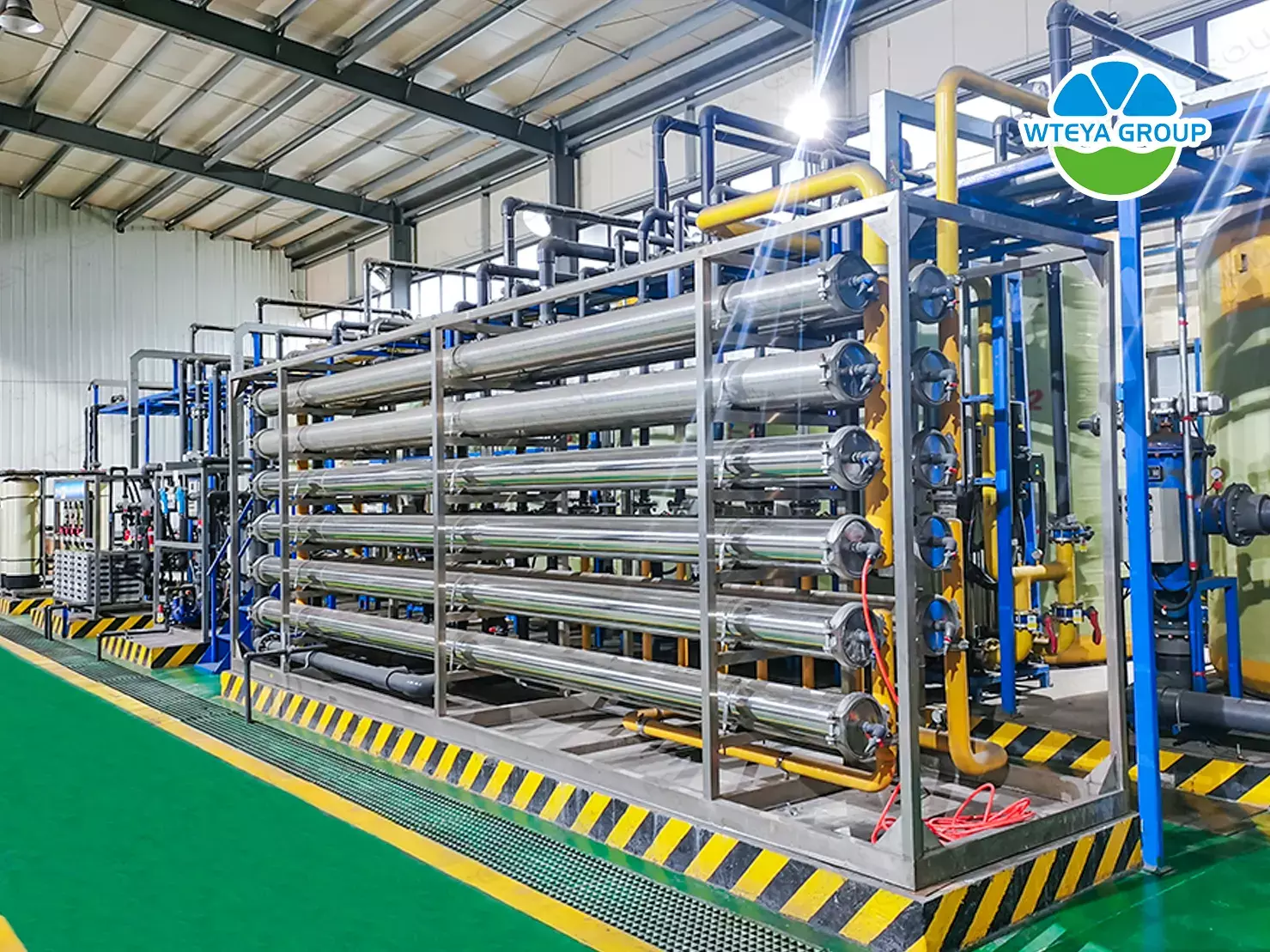
Yes. A reverse osmosis desalination plant can treat brackish water — and in most cases it is the easier duty. Brackish water carries roughly 1,000–25,000 mg/L of total dissolved solids, against 35,000–45,000 mg/L for seawater, so the same physical process runs at lower pressure, lower energy and higher recovery.
What changes is not the principle but the design: membrane type, pump pressure, staging and pretreatment all move. Below is what plant owners and project engineers should check before specifying a brackish water system, or adapting an existing seawater plant to a lower-salinity source.
🌊 Why Brackish Water Is an Easier Duty
Osmotic pressure rises roughly in proportion to salinity — about 0.7 bar per 1,000 mg/L of dissolved salts. At 5,000 mg/L the feed exerts only 3.5 bar of osmotic pressure; at seawater strength it reaches 25 bar or more. That difference drives everything downstream.
Practical consequences: operating pressure falls to 10–25 bar instead of 55–70 bar, specific energy drops to 1–2 kWh/m³ instead of 3–4, and recovery can reach 50–75% instead of 40–50%. Lower pressure also means lower-grade materials and a smaller pump, both of which cut capital cost.
🔬 What Changes Inside the Plant
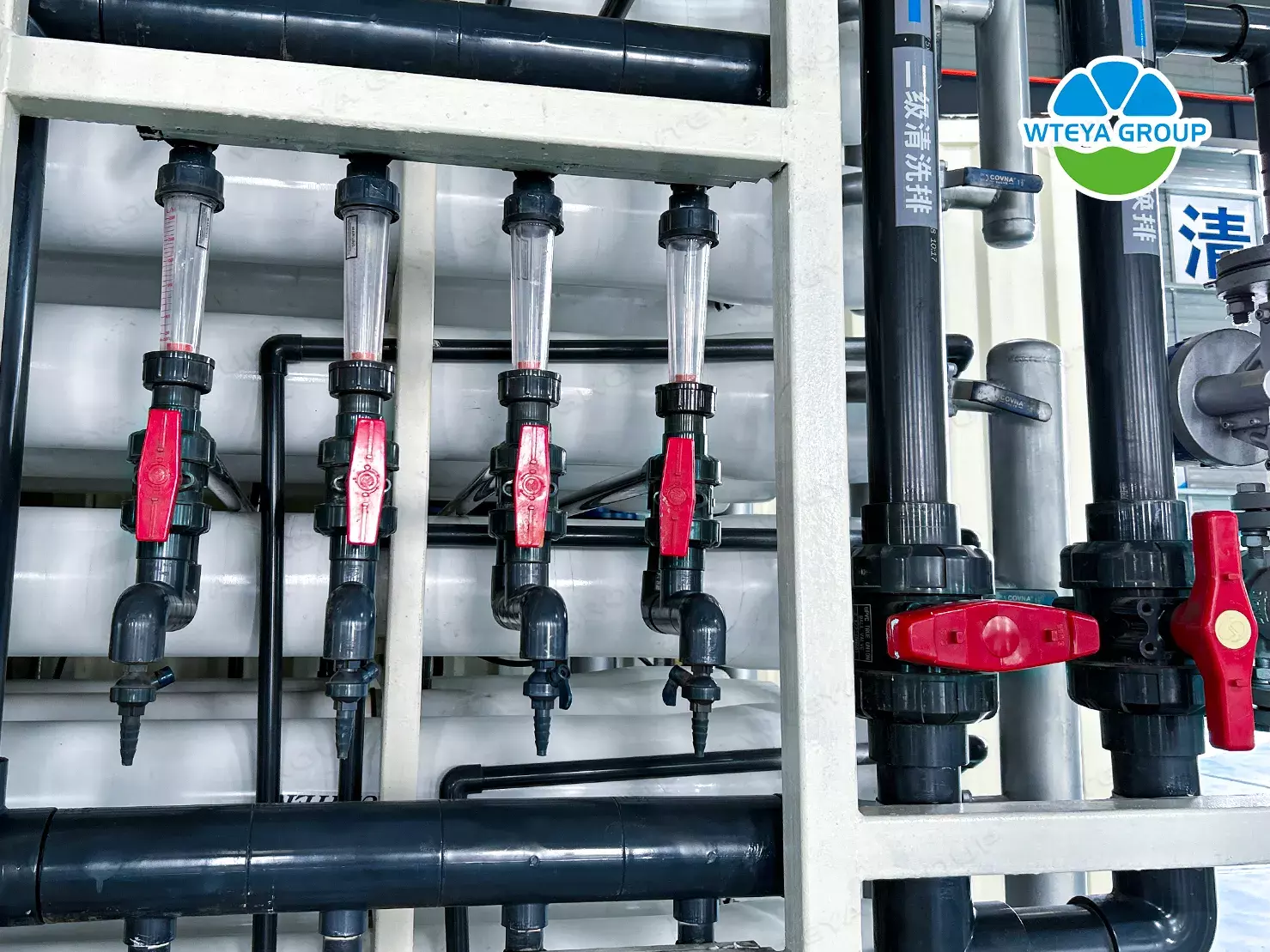
Membranes. Brackish water uses BWRO elements, which have a looser, higher-flux active layer than seawater SWRO membranes. Typical flux is 15–25 L/m²·h for BWRO against 12–18 for SWRO, so fewer elements are needed for the same output.
Pumps and pressure vessels. A multistage centrifugal pump rated for 10–25 bar replaces the high-pressure seawater pump. Vessels are usually lower pressure class (300 psi rather than 1,200 psi), which reduces both weight and cost. Energy recovery devices are rarely economic below about 2,000 mg/L, but become attractive on the higher-salinity end of the brackish range.
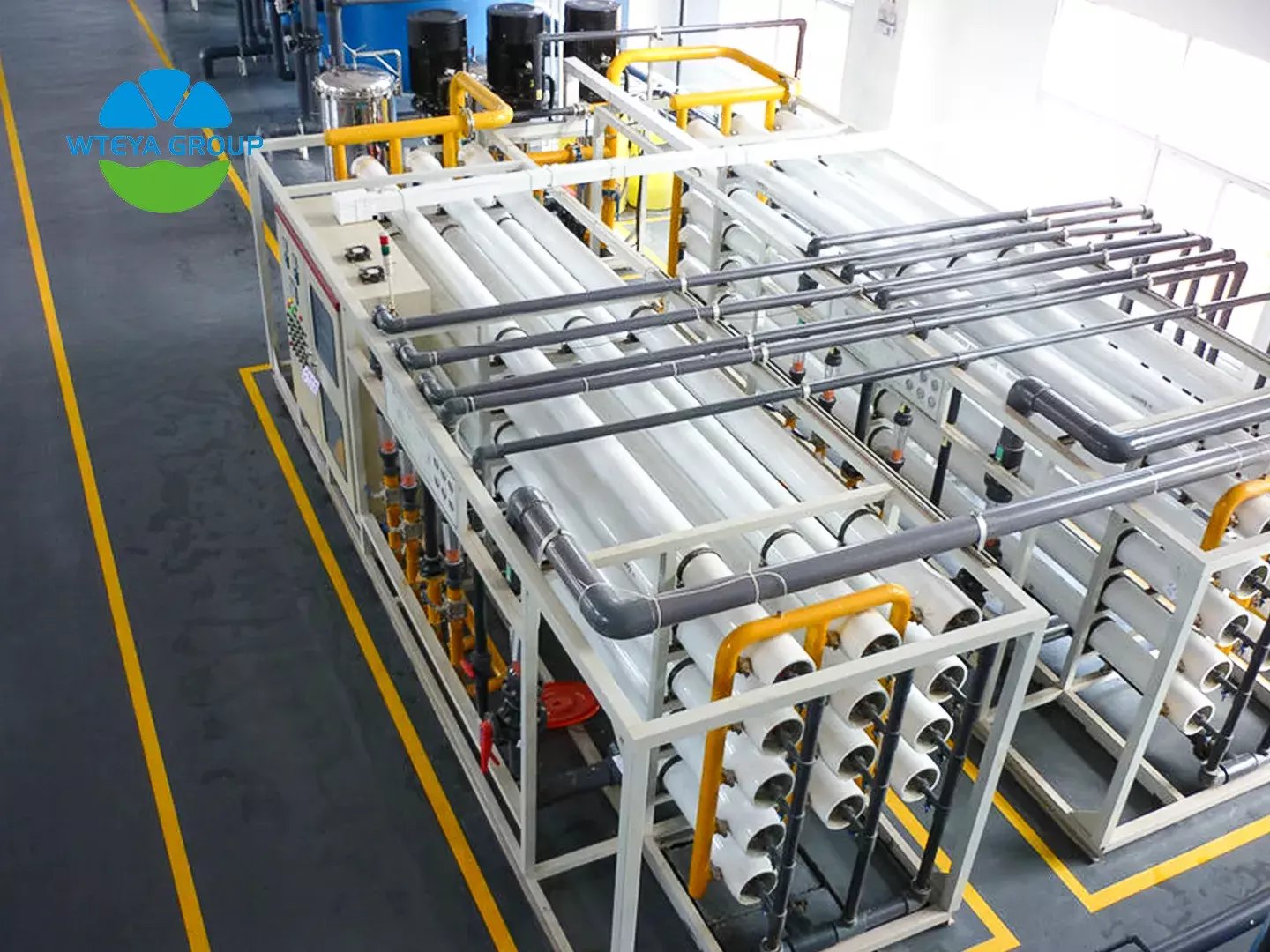
Staging. Because recovery is high, brackish systems frequently use two-stage arrays (e.g. 2:1) with interstage boosting, so the second stage sees concentrated brine without exceeding the element's maximum pressure.
Pretreatment. Seawater plants worry about biological fouling and boron; brackish plants more often face hardness scaling, iron, manganese and nitrate. Antiscalant dosing, aeration or oxidation for iron and manganese, and softening where hardness is high are common additions.
⚙️ Adapting a Seawater Plant, or Building a Brackish One?
A seawater plant can be re-membraned and re-rated for brackish feed, but three items usually need attention: the pump curve (a seawater pump at 60 bar will be far off its efficient point at 20 bar), the pressure rating of vessels and piping (safe, but oversized), and the control logic, which must be re-tuned for the higher recovery and different scaling risk.
Where the existing plant is small and the feed is only mildly brackish, re-membraning is often the cheapest route. Where the duty is continuous and recovery above 65% is needed, a purpose-built brackish train — with two-stage arrays, interstage boost and tailored antiscalant control — usually wins on lifecycle cost.
🏭 Typical Applications
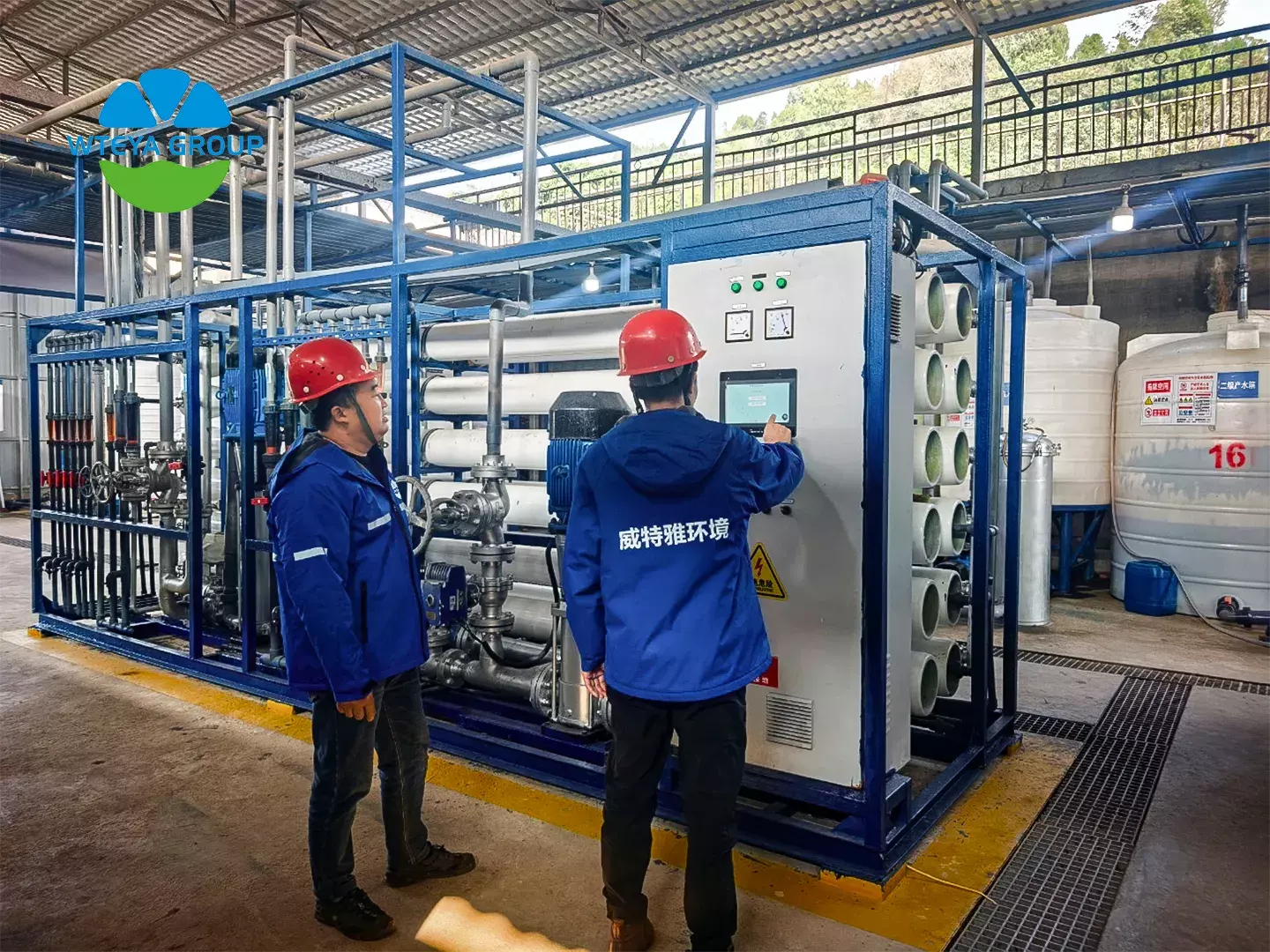
Brackish water desalination covers more ground than coastal projects. The three most common cases are inland groundwater with elevated salinity (often 2,000–10,000 mg/L), estuary and river-mouth water affected by tidal seawater intrusion, and industrial circulating water blowdown where dissolved solids concentrate over repeated cycles.
In each case the plant must be designed against the worst-case salinity, not the annual average — a river intake can swing several thousand mg/L between dry season and flood.
📊 Checkpoints Before You Commit
Five numbers decide whether a brackish design will hold up in service: maximum TDS and its seasonal variation, hardness and silica (they cap recovery), iron and manganese (they foul membranes), target permeate quality (usually below 500 mg/L TDS), and brine disposal route (the higher the recovery, the smaller and cheaper the reject stream).
A water analysis taken across a full season is worth more than a single grab sample: most brackish plants that underperform were designed on a best-case sample and commissioned in the worst case.
❓ Frequently Asked Questions
Can the same plant treat both brackish water and seawater?
Not efficiently. The membranes, pump pressure class and staging differ enough that a dual-duty plant is a compromise on both. If the source may change, design for the higher-salinity case and accept the cost.
How much does brackish water desalination cost to run?
Energy is typically 1–2 kWh/m³, so power is a smaller share of operating cost than for seawater. Membranes, antiscalant and cartridge filters dominate instead, and membrane life of 3–5 years is normal with good pretreatment.
What recovery can I expect?
50–75% depending on hardness and silica. Above 75% the risk of calcium carbonate and silica scaling rises sharply, and the antiscalant programme has to be validated by a scaling model rather than by rule of thumb.
Schedule a video call with our engineers to explore your options.
📲 WhatsApp: +86-1800 2840 855
📧 Email: info@wteya.com
🌐 Website: www.wteya.com
Previous: Daily Capacity of a Seawater Desalination Plant: Sizing Calculation
Next: No More