







How to Choose the Right Portable Watermaker for Your Boat
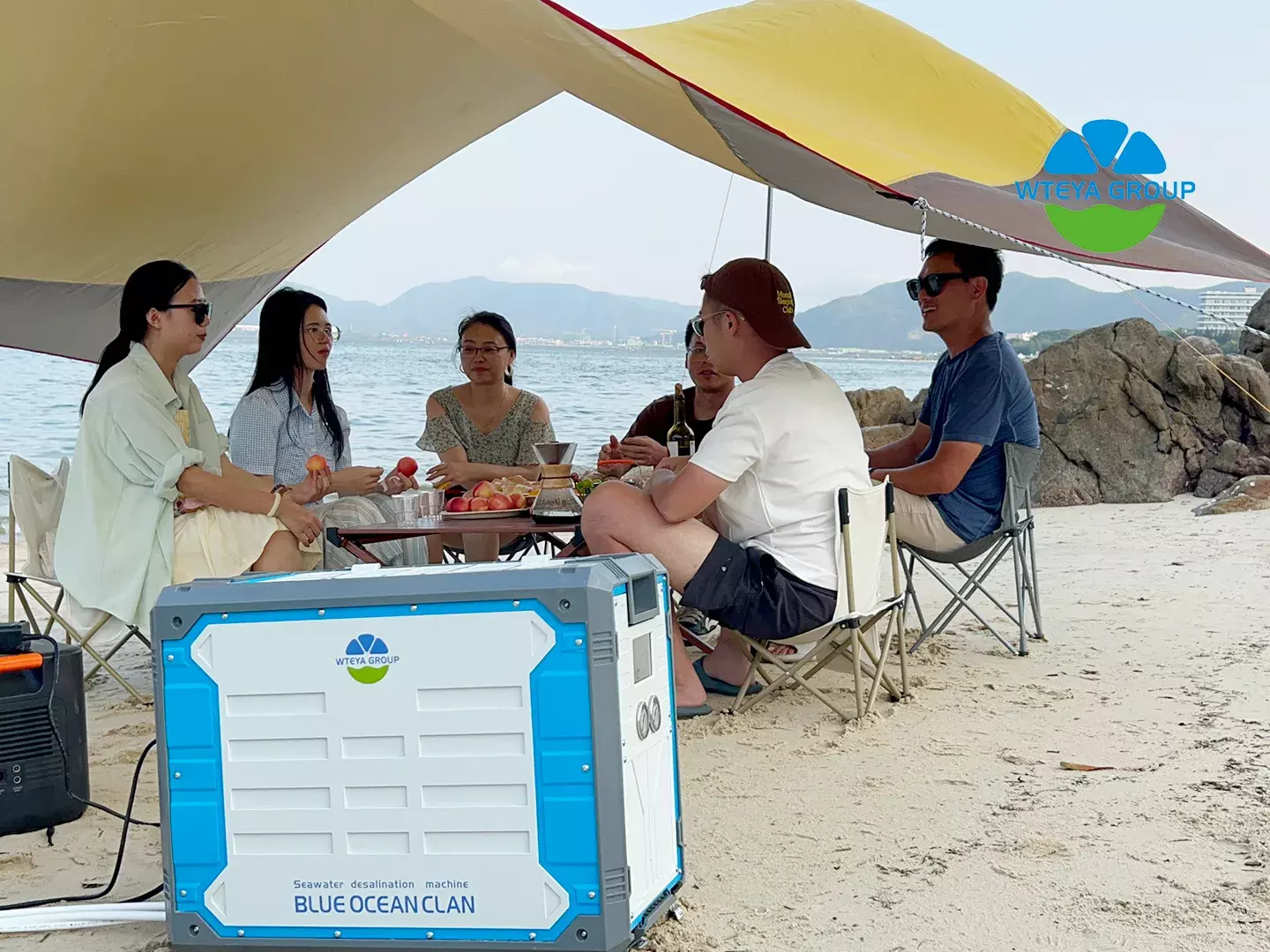
Buying a watermaker for a boat is a decision about the vessel first and the machine second. A unit that fits a quay-side villa can be the wrong choice for a 12 m fishing boat, not because it lacks capacity but because its power draw, its footprint and its service access do not match the space and the electrical system on board. Four variables settle almost every case: daily water demand, power source, deck space and budget.
This guide walks through those four variables for a small vessel, using a typical 300 GPD portable unit as the reference point, and then sets out the questions worth asking before a quotation is issued.
⚙️ Step 1: Size the Unit to the Crew, Not to the Tank
A portable seawater unit in the 300 GPD class produces roughly 1,135 litres per day, or about 50 litres per hour while it runs. That is enough drinking, cooking and basic washing water for 5 to 8 people, which covers the crew of most fishing boats and charter yachts.
Resist the temptation to buy capacity you will never run. A watermaker that is switched on for one hour a day makes about 50 litres; if the crew uses 300 litres a day, the machine must run six hours, and that runtime — not the nameplate output — determines how the unit is installed, how often the prefilters are changed and how much noise the crew lives with. Work out consumption first, then choose the smallest unit that covers it with a sensible running margin.
Tank capacity then follows: a unit that makes 1,100 litres a day is wasted if the boat can only store 200 litres. Either match the tank to the output, or plan to run the unit daily rather than in weekly bursts.
🔌 Step 2: Match the Power Supply to the Vessel
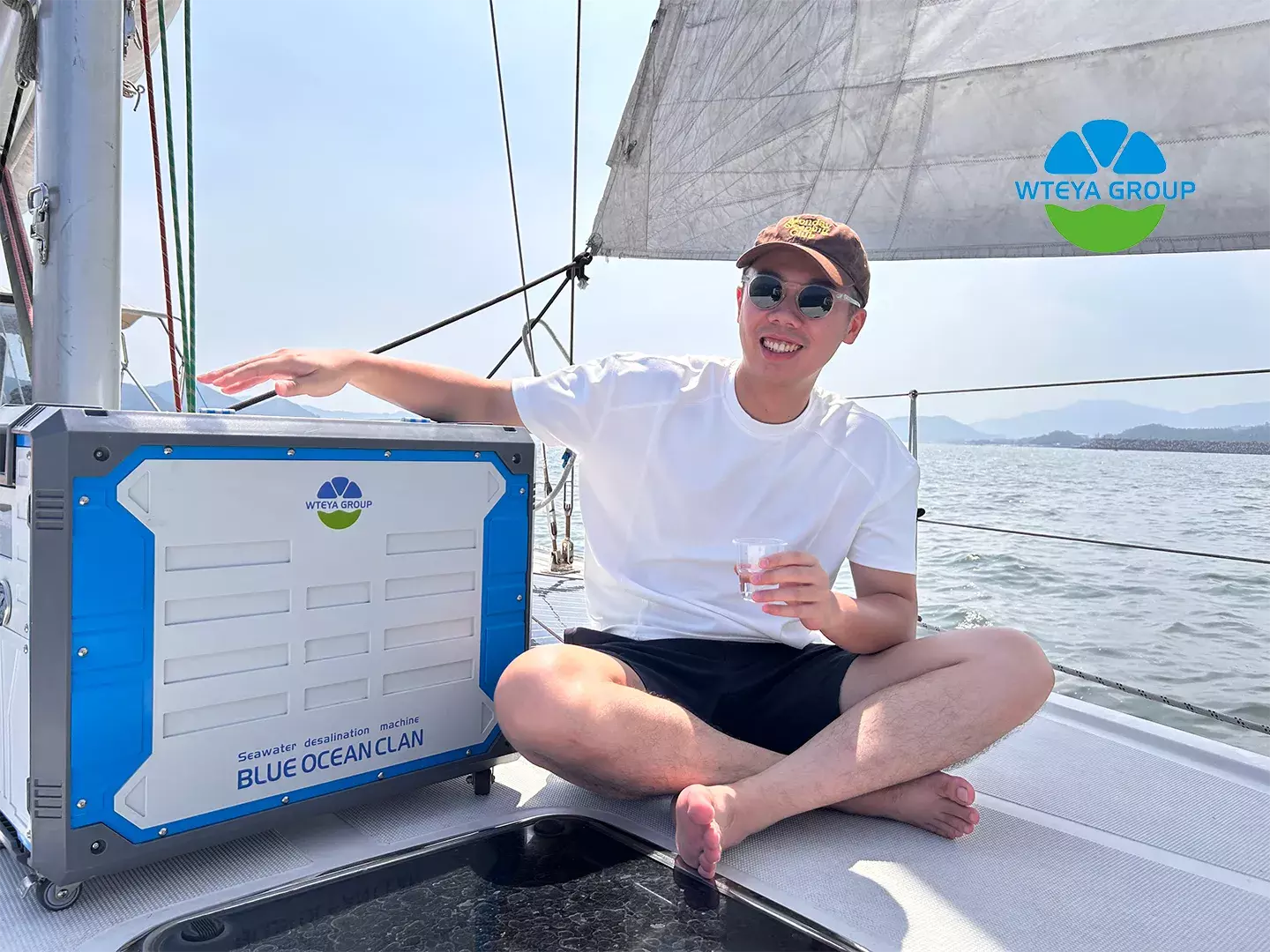
This is where most boat installations go wrong. The reference unit draws about 1.35 kW in total — roughly 0.15 kW for the feed pump and 1.1 kW for the high-pressure pump that pushes seawater through the membrane at up to 100 bar. At 24 V DC that is a continuous current of roughly 56 A, which has direct consequences for battery bank size, alternator rating, cable cross-section and breaker selection.
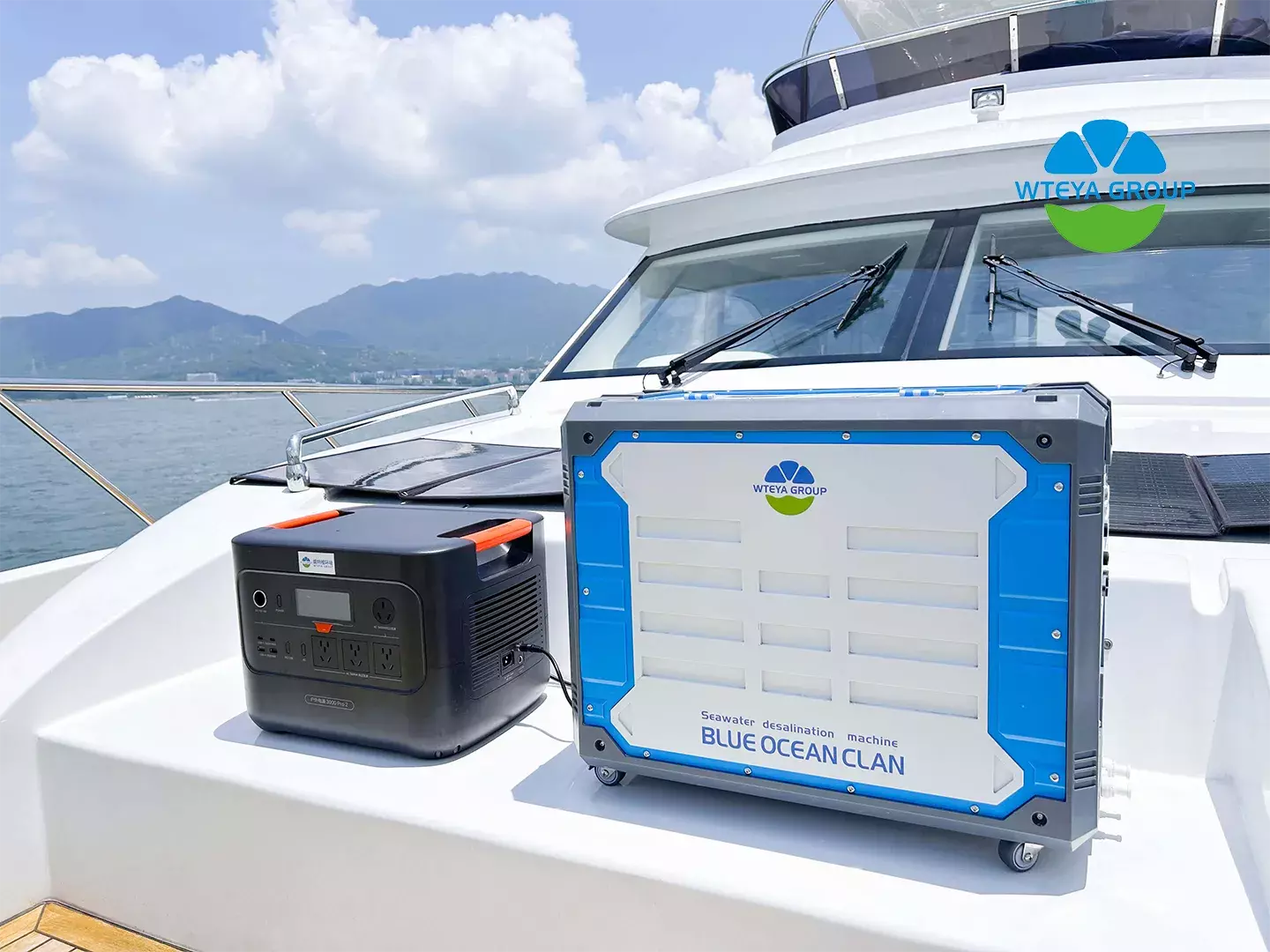
Three supply arrangements are common. Fishing boats and yachts with a large 24 V DC bank run the unit directly from the bank through a dedicated breaker, avoiding inverter losses. Boats with a generator or reliable shore power use the 220–230 V AC version, which is simpler to wire but useless at anchor without the generator running. Vessels with no installed power — small sailboats, remote sites — pair a solar array and battery with a DC unit, but the array must be sized for the daily energy demand, not for the pump rating alone.
Do not assume a 12 V system will run a 24 V unit. At half the voltage the current doubles, and most 24 V motor controllers will not start at all. A 12 V vessel needs either a 12 V version of the unit or a DC-DC converter sized for the starting current, which is several times the running current.
📐 Step 3: Confirm Deck Space, Weight and Service Access
A 300 GPD portable unit typically measures about 610 × 320 × 497 mm and weighs around 40 kg, which fits a lazarette, a cockpit locker, an engine-room bulkhead or the deck of a small workboat. The footprint is only half the question: the installation also needs clear space in front of the prefilters, the membrane housing and the UV lamp for element changes, and a drain or bilge path for the brine and any flush water.
Plan for vibration and for salt. Anti-vibration mounts protect both the frame and the hull, and every electrical connection should be above the bilge water line with sealed glands. Where the unit sits in an enclosed space, allow ventilation — the high-pressure pump and motor produce heat that will otherwise shorten the life of the controller.
Feedwater intake matters as much as space. A dedicated sea chest with a strainer is preferable to a temporary hose over the side, because it keeps seaweed and sand out of the prefilters and gives a stable, flooded suction. Suction lift should be kept short; a long, high run of hose is the usual reason a unit that works on the dock fails at sea.
🌊 Step 4: Check Feedwater Salinity and Membrane Duty
Standard seawater at TDS up to 35,000 ppm is what a portable unit is designed for, and it is what the published performance figures assume. A 3.1 m² membrane element running at about 100 bar recovers roughly 10% of the feed as product water, which is deliberately conservative: on a small boat the energy cost of pushing recovery higher outweighs the extra litres, and a low recovery keeps scaling and membrane fouling under control.
If the vessel operates in a brackish estuary, a hypersaline lagoon or water warmer and more turbid than normal, say so before the order is placed. Salinity above the standard range, high silt load or an oil sheen at the intake all change the pretreatment and sometimes the membrane itself, and a unit specified for clean ocean water will underperform in those conditions.
Product quality is the other half of the specification. A well-matched reverse osmosis system of this size delivers water below 1,000 mg/L TDS, inside the usual drinking-water guidance, provided the membrane is intact and the prefilters are changed on schedule. UV disinfection after the membrane is standard on portable units and should not be treated as an optional extra.
💡 Step 5: Compare the Whole Package, Not the Price Tag
Two units with the same output can differ by a factor of two in price, and the difference is almost never the pump. It is the scope: whether prefiltration and UV are included, whether the high-pressure pump is a marine-grade unit with spare seals, whether the frame is stainless or painted steel, whether an installation kit and a commissioning visit are part of the offer, and what the warranty actually covers.
Ask for a quotation broken down by item, and ask what a five-year consumables budget looks like — filter cartridges, UV lamps, membrane replacement and pump seals. On a boat that runs the unit daily, consumables often cost more than the initial price difference between a cheap unit and a properly specified one. Ask, too, who services the unit in your region and how quickly spare parts can be shipped, because a watermaker that is waiting for a membrane is not a watermaker.
For vessels that need a larger, containerised or skid-mounted arrangement, the same logic scales to a desalination plant or a mobile water treatment plant, where the pretreatment train and the control philosophy are specified together rather than bought piece by piece.
🏆 Why Choose WTEYA
WTEYA has built water treatment and desalination equipment since 2009, with more than 2,000 customers across 30 provinces and a 30,000 m² manufacturing base in Jingshan. Portable units are assembled and pressure-tested before shipment, and the membrane, pump and control package is matched to the salinity and duty of the actual site rather than to a catalogue average.
For boat builders, charter operators and fleet owners we provide customised designs and full OEM & ODM services, including 12 V or 24 V variants, marine-grade frames and installation kits. Our engineers will review your tank size, daily consumption and electrical system before recommending a model, so that the unit you buy is the one your vessel can actually run.
❓ Frequently Asked Questions
Can a 24 V watermaker run from a 12 V battery bank?
Not directly. At 12 V the current doubles to over 110 A and most 24 V controllers will not start. Use a 12 V version of the unit, or a DC-DC converter rated for the starting current rather than the running current.
How much water does a 300 GPD unit make per hour?
About 50 litres per hour while running, or roughly 1,135 litres over a full day. Real output falls a little as the membrane ages and as seawater temperature drops in winter.
Does the unit need a dedicated through-hull intake?
A sea chest with a strainer is the better arrangement, but a temporary intake with a coarse strainer works for occasional use. Keep the suction line short and the strainer clean, or the high-pressure pump will cavitate and the prefilters will clog within days.
Schedule a video call with our engineers to explore your options.
📲 WhatsApp: +86-1800 2840 855
📧 Email: info@wteya.com
🌐 Website: www.wteya.com

Previous: How Does a Boat Water Maker Work?
Next: No More