







What Is the Service Life of a Portable Desalination Unit?
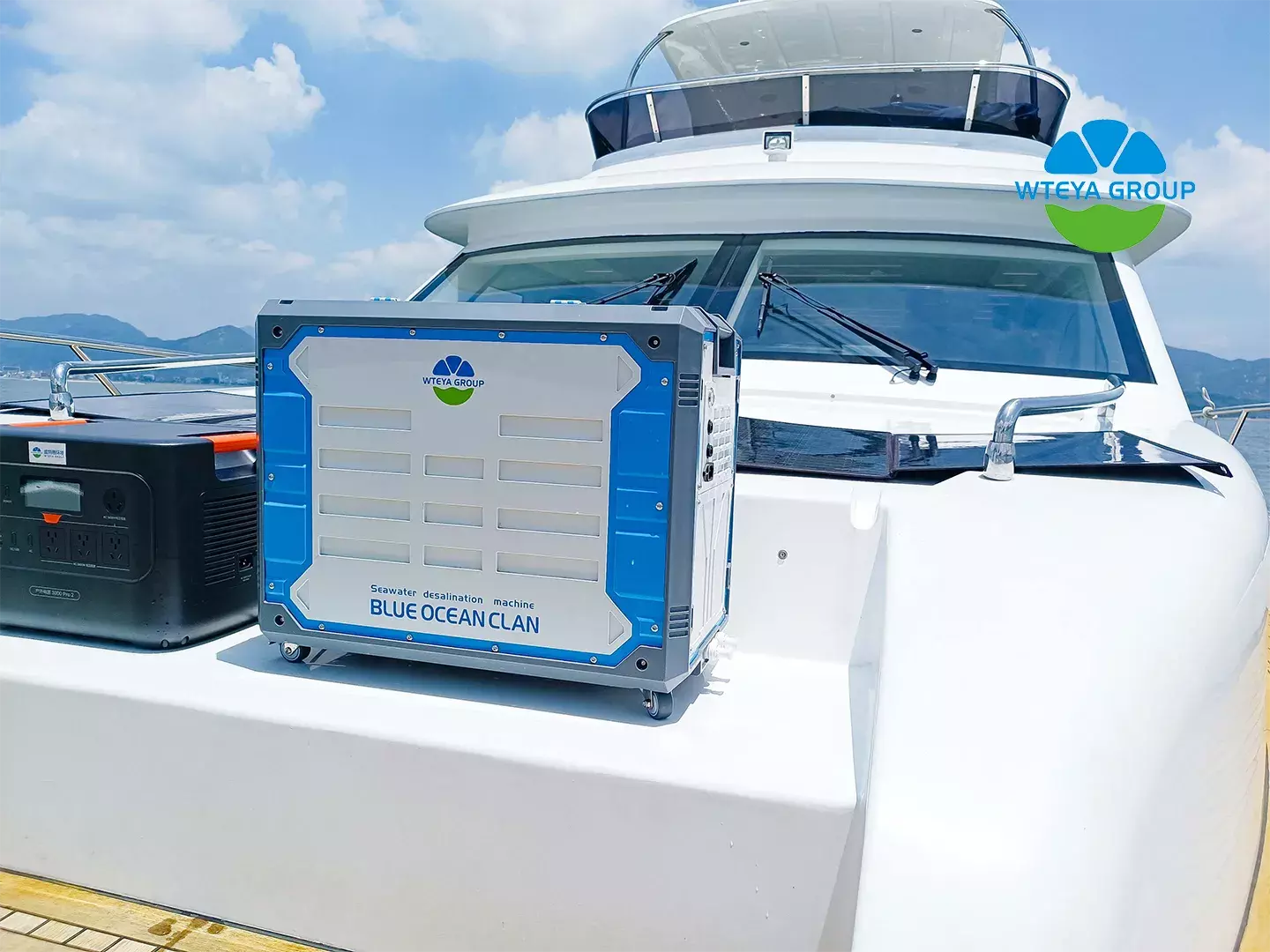
A portable desalination unit is engineered for a long working life, but not every part inside it ages at the same speed. The frame, wetted piping and control cabinet of a portable water maker stay in service for more than 10 years when the machine is maintained on schedule, while the RO membrane, UV lamp and pre-filters each follow their own replacement clock.
That split is what a service budget really has to cover. Below are the intervals we specify for each wear part, and the operating habits that decide whether a unit reaches its tenth year or is retired in its fifth.
🔧 Two Clocks: The Machine and Its Consumables
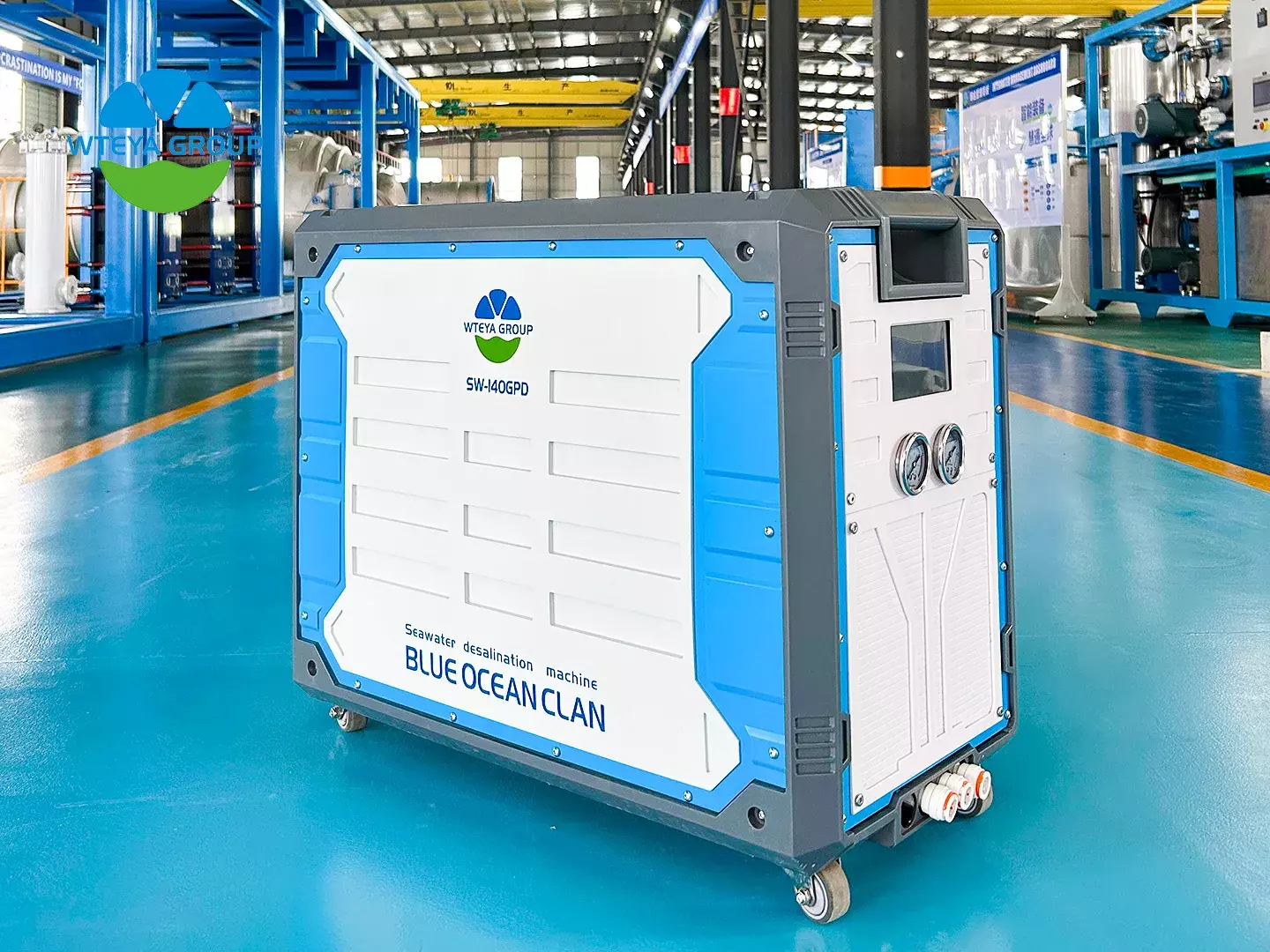
The structural side of a portable desalination plant is simple: a stainless frame, PE, PPH or 316L wetted piping, and a sealed electrical cabinet. Kept dry and fed with the correct single-phase supply, these parts do not wear out on a schedule — they last as long as the unit is protected from sediment, vibration and wrong voltage.
Consumables behave differently. They are consumed by running hours and by feed water quality, so their life is counted in operating hours rather than calendar years. Two identical machines on two different coasts can therefore need membrane replacement years apart, even though both were bought in the same month.
🧪 RO Membrane: The Part That Sets the Ceiling
The membrane decides both product water quality and the largest single replacement cost. In our specification an RO membrane lasts 3 to 5 years, a figure that assumes roughly 3,600 or more operating hours — about 180 to 360 running days, depending on daily duty.
Do not wait until the water tastes salty. Clean or replace when permeate flow has fallen by 15%, or when salt passage has risen by 5% against the commissioning baseline. Acid and alkaline cleaning at that point normally restores output; carried on past it, the element is being damaged rather than cleaned.
Membrane chemistry and element sizing are covered on our reverse osmosis system page.
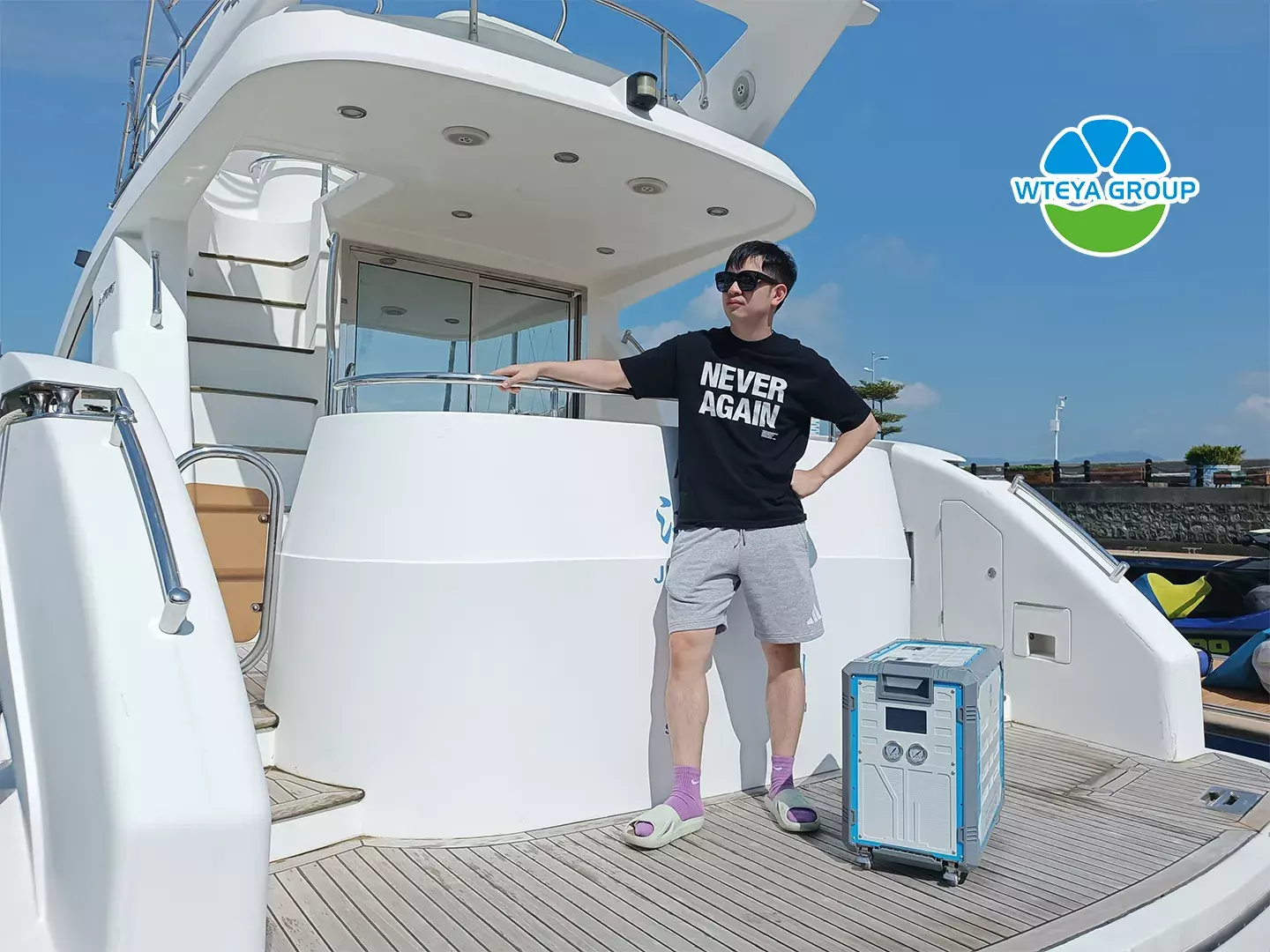
💡 UV Lamp and Pre-Filters: Short Cycles, Low Cost
The UV lamp is rated for more than 3,000 hours. Its output fades before it fails, so treat the hour meter as the replacement signal rather than waiting for the lamp to go dark.
Pre-filters run on the shortest cycle in the whole unit: the first stage is washed every 5 to 60 hours depending on turbidity, the second stage every 15 to 30 days. Both are washable and reusable, which is why sediment control is the cheapest reliability measure available on a portable unit.
🛠️ Four Habits That Carry a Unit to Ten Years
Keep pretreatment ahead of the pump. Sediment that reaches the high-pressure pump scores the plungers and passes straight into the membrane; washing a cartridge is far cheaper than either repair.
Change pump oil on the hour meter. The plunger pump takes CKD220 gear oil every 500 hours. Running past that interval, or starting dry, is the most common cause of pump failure we see in the field.
Protect the membrane while idle. For long shutdowns, seal the element in SMBS preservation solution and renew the solution every 30 days, so biological growth does not colonise the membrane while the unit sits.
Respect the power specification. Portable units are single-phase; a three-phase supply is not permitted. Both power lines must be connected at the same time, and the pump must never be started before the oil charge is confirmed.
📊 Service Life at a Glance
Whole unit (frame, piping, controls): 10 years or more with scheduled maintenance.
RO membrane: 3 to 5 years, or 3,600+ running hours; replace on 15% flow loss or 5% salt passage rise.
UV lamp: 3,000+ hours of operation.
Pre-filter stage 1: clean every 5 to 60 hours. Stage 2: every 15 to 30 days.
Plunger pump oil: CKD220 gear oil every 500 hours.
Idle preservation: SMBS solution renewed every 30 days.
🔍 Repair or Replace?
When a unit past its membrane cycle still reaches rated flow, cleaning plus consumable replacement is almost always the right call — hours do not age the frame, the piping or the cabinet. When permeate flow can no longer be recovered by cleaning and the pump needs a rebuild in the same season, the arithmetic usually still favours a membrane-and-pump service over a new machine, provided the cabinet and frame are dry and sound.
This is why we ask for the hour meter reading and the commissioning log before quoting service: the two clocks tell us which part has actually run out. Trailer-mounted versions of the same platform are described on our mobile water treatment plant page.
❓ Related FAQs
🔗 How Much Does a Portable Seawater Desalination Machine Cost?
🔗 Can a Portable Seawater Desalination Machine Run on Solar Power?
🔗 How Much Power Does a Small Seawater Desalination Unit Need?
Schedule a video call with our engineers to explore your options.
📲 WhatsApp: +86-1800 2840 855
📧 Email: info@wteya.com
🌐 Website: www.wteya.com

Previous: Can Small Desalination Plants Be Used on Islands?
Next: No More