







What Is the Optimal Concentration Level for Membrane Concentration in High-Salinity Wastewater Zero Liquid Discharge?
In high-salinity wastewater zero liquid discharge (ZLD) projects, a treatment process combining pretreatment, membrane concentration, and evaporative crystallization is widely used. Pretreatment mainly removes suspended solids, hardness, and other contaminants that may affect membrane system performance. Membrane separation is then used to recover as much water as practical, reducing the volume of wastewater entering the evaporation system. Finally, the remaining high-concentration brine is treated through evaporation and crystallization.
Although this process route is relatively straightforward, an important question often arises during project design: How far should membrane concentration go to achieve the best overall performance?
It may seem logical that higher membrane concentration is always better. A smaller volume of concentrate means less wastewater needs to be processed by the downstream evaporation system, potentially reducing MVR evaporator capacity requirements and operating energy consumption.
However, high-salinity wastewater treatment is not simply a matter of removing as much water as possible. As the concentration factor increases, salts, hardness, and other contaminants become progressively enriched in the concentrate. Once their concentrations reach certain levels, the operating conditions of the membrane system change, while the downstream evaporator faces increasingly complex feedwater characteristics.
Therefore, there is no universal membrane concentration endpoint suitable for every project. A single concentration factor cannot determine whether a treatment process is technically or economically reasonable.
Why Should Membrane Concentration Not Be Pushed Too Far?
The main purpose of membrane concentration is to separate water from high-salinity wastewater through membrane technology. Part of the water passes through the membrane as permeate for reuse, while salts and other rejected substances remain in the concentrate.
During the initial operating stage, membrane systems can generally maintain relatively stable permeate flux and operating performance. However, as the concentrate becomes increasingly enriched, the pressure on the membrane system gradually increases.
One of the most common problems is scaling.
High-salinity wastewater often contains calcium, magnesium, silica, and various inorganic salts. Their concentrations may not appear particularly high in the original feedwater, but continuous membrane concentration causes these substances to accumulate. When their concentrations exceed the corresponding solubility limits, deposits may form on membrane surfaces.
This can result in:
• Declining membrane permeate flux.
• Increasing operating pressure requirements.
• More frequent chemical cleaning.
• Higher membrane maintenance and replacement costs.
In addition to scaling, the osmotic pressure of the concentrate also increases as salt concentrations rise. Even if the equipment operating pressure remains relatively stable, the effective driving pressure available for water transport across the membrane gradually decreases. As a result, membrane productivity can be significantly affected.
More importantly, the economic benefits of membrane concentration must be evaluated together with the downstream evaporation load.
If further increasing the membrane concentration factor only reduces a limited amount of evaporation volume while substantially increasing membrane fouling, scaling, and maintenance costs, the additional concentration may not be economically justified.
How Should Membrane Concentration and Evaporative Crystallization Work Together?
The core principle of combining membrane concentration with evaporative crystallization in a high-salinity wastewater ZLD system is not simply connecting two pieces of equipment in sequence. Instead, each technology should handle the treatment stage that best matches its capabilities.
Membrane systems are particularly suitable for recovering water from relatively large wastewater volumes. After appropriate pretreatment reduces the contaminant load, membrane separation can recover a substantial portion of the water, reducing the volume that must enter the downstream evaporator.
For industrial facilities, this step can help reduce evaporation equipment capacity requirements and control overall operating costs.
However, membrane systems are not designed to increase concentration indefinitely. When salt content, hardness, and other contaminants in the concentrate become excessively high, further membrane concentration becomes increasingly difficult.
At this stage, transferring the high-concentration brine to an evaporation and crystallization system is often a more practical approach.
On the other hand, if membrane concentration is stopped too early, a large amount of water that could otherwise be recovered through membrane separation will enter the evaporator. This increases downstream treatment volume, equipment investment, and long-term energy consumption.
Therefore, an efficient treatment process should not force either the membrane system or the evaporator to handle the entire treatment burden. Instead, the two technologies should be assigned appropriate roles according to wastewater characteristics and operating conditions.
Why Does Higher Salt Concentration Make Downstream Treatment More Difficult?
After membrane concentration, dissolved salts become increasingly enriched in the remaining wastewater. Depending on the original feedwater composition and membrane recovery rate, the concentrate may reach a relatively high salinity level, placing additional demands on downstream evaporation equipment.
If a conventional evaporator is not properly designed for the specific wastewater characteristics, long-term operation may be affected by scaling, foaming, and corrosion.
Scaling is one of the most common operational risks when treating high-salinity concentrate through evaporation.
As evaporation continues, water is removed and dissolved salts become more concentrated. Certain low-solubility substances may eventually precipitate and accumulate on heat transfer surfaces.
Once a thick scale layer develops, heat transfer efficiency decreases. The equipment may require more energy to maintain the same evaporation capacity, and severe scaling can result in unplanned shutdowns for cleaning.
Therefore, evaluating whether membrane concentration should be increased requires more than looking at total dissolved solids (TDS).
The specific composition of the dissolved salts must also be considered. Calcium, magnesium, silica, and sulfate may create different scaling risks during further concentration and evaporation.
Only with a detailed understanding of the actual water composition can engineers determine the appropriate membrane concentration endpoint and whether additional softening or hardness removal is required before the concentrate enters the evaporation system.
Organic matter is another important consideration.
Some organic compounds are retained by membranes and become progressively enriched during concentration. If the organic content of the concentrate becomes too high, it may cause foaming and vapor entrainment in the downstream evaporator. Under certain operating conditions, organic deposits may also contribute to fouling or thermal degradation, affecting heat transfer and evaporation stability.
For high-salinity wastewater with a significant organic load, targeted pretreatment should be considered according to the actual water characteristics rather than relying on the evaporator to resolve every contamination issue.
Why Do High-Salinity Concentrates Require More Careful Material Selection?
In addition to scaling and organic fouling, corrosion is another issue that cannot be overlooked in high-salinity wastewater ZLD projects.
As the concentration factor increases, chloride ions and other potentially corrosive substances may become enriched. When combined with elevated operating temperatures and specific pH conditions, the corrosion risk to equipment materials can increase significantly.
Therefore, material selection for evaporation systems must be based on actual wastewater analysis rather than equipment capacity alone.
For concentrates with high corrosivity, material compatibility should be evaluated according to chloride concentration, pH, temperature, and other chemical characteristics.
Depending on the operating conditions, corrosion-resistant materials such as titanium and Hastelloy may be considered to improve long-term equipment reliability in high-salinity environments.
This is also why high-salinity wastewater ZLD projects should not be evaluated solely by comparing evaporator prices and evaporation capacities.
Factors such as equipment configuration, material selection, fluid flow conditions, and scaling control also have a direct influence on long-term operating performance.
What Is the Most Reasonable Concentration Endpoint for Membrane Systems?
There is no single standard answer to this question that applies to every project.
A more practical engineering approach is to determine the membrane concentration endpoint by working backward from the final treatment objectives and the capabilities of the downstream evaporation system.
If membrane concentration is too low, the resulting concentrate volume remains relatively large. The downstream evaporator must process more wastewater, potentially increasing equipment investment and operating costs.
However, if membrane concentration is pushed too far to reduce evaporation volume, the membrane system may enter an operating range characterized by severe fouling, scaling, and high osmotic pressure. At the same time, the downstream evaporator receives a concentrate with higher salt concentrations and potentially more challenging corrosion characteristics.
A reasonable membrane concentration endpoint should therefore balance three key requirements:
• The membrane system must maintain stable and economically acceptable operation.
• The downstream evaporation system must be capable of reliably treating the resulting concentrate.
• The overall capital investment and operating costs of the integrated treatment system must remain within an acceptable range.
In other words, the objective of membrane concentration is not to achieve the highest possible salinity, but to find the right balance between economic efficiency and operational stability. For each project, this balance should be determined through feedwater analysis, membrane operating parameter evaluation, concentrate characterization, and evaporation or crystallization testing where necessary.
Zero Liquid Discharge Is Not Only About Water Recovery but Also Salt Management
After membrane concentration and evaporative crystallization, water is recovered or removed from the wastewater. However, the salts and certain contaminants originally present in the wastewater do not disappear. They ultimately remain in the form of crystallized salts or solid residues.
This introduces another important question for ZLD projects: How should the recovered salts be managed?
In some projects, the resulting crystallized salts have relatively simple compositions and may be suitable for further resource recovery or reuse.
However, if the crystals contain significant amounts of complex impurities, or if applicable local regulations and project conditions require them to be disposed of as hazardous waste, the subsequent treatment and disposal costs may be substantial.
In some cases, the evaporation system itself may operate without major problems, but the overall economic performance of the ZLD project can still be affected because there is no clearly defined utilization or disposal route for the final crystallized salts.
Therefore, salt management should not be postponed until after the evaporation and crystallization equipment begins operating.
During the initial project design stage, engineers should evaluate the wastewater source, salt composition, final product requirements, and applicable disposal regulations to establish a suitable management strategy for the recovered solids.
Only when the entire treatment chain is considered, from feedwater to final solid residue, can a ZLD system form a complete and practical treatment loop.
How Does WTEYA Handle High-Salinity Concentrate Treatment?
To address the challenges associated with high-salinity wastewater ZLD projects, including high salt concentrations, hardness, organic matter enrichment, scaling, and corrosion, WTEYA can evaluate and develop integrated treatment solutions based on actual wastewater characteristics and project requirements.
Before the concentrate enters the evaporation system, additional pretreatment processes can be considered according to the specific water composition. These may include organic matter removal, pH adjustment, water softening, and the reduction of scale-forming substances to minimize potential operational risks during evaporation.
For the evaporation of high-salinity concentrates, WTEYA's MVR evaporation systems can be configured according to specific operating conditions, including equipment structure and material requirements.
For highly corrosive wastewater, materials such as titanium and Hastelloy may be considered based on the characteristics of the process medium.
To address scaling and foaming risks commonly associated with high-salinity wastewater, engineering design should also consider evaporator configuration, fluid flow conditions, heat transfer performance, and operating parameters.
In addition, automated control systems can monitor and regulate key operating variables such as temperature, pressure, liquid level, and concentration, helping the equipment respond more effectively to changes in concentrate characteristics.
For continuous production facilities, the value of a ZLD system is not simply achieving a qualified treatment result during a single test. More importantly, the system should maintain reliable performance over extended operating periods.
Therefore, when designing integrated membrane concentration and evaporative crystallization systems, WTEYA focuses on the compatibility of the entire treatment process rather than pursuing the maximum concentration or performance of a single treatment stage.
Conclusion:
In high-salinity wastewater zero liquid discharge projects, membrane concentration is not necessarily better when pushed to higher levels. If membrane concentration is too low, the downstream evaporation system must handle a larger wastewater volume. However, excessively increasing the concentration factor can intensify membrane scaling, fouling, corrosion, and the treatment challenges associated with high-salinity concentrates. A more practical approach is to determine the membrane concentration endpoint according to actual wastewater characteristics and downstream treatment capabilities. The membrane system should focus on economically recovering water, while the evaporative crystallization system handles the remaining concentrate that is difficult to process further through membrane separation. Ultimately, the key question in high-salinity wastewater ZLD is not simply how concentrated the membrane system can make the wastewater. It is how to coordinate pretreatment, membrane concentration, evaporative crystallization, and final salt management into an integrated system that is stable and economically viable. Only by considering every treatment stage as part of a complete process chain can a theoretical ZLD configuration become a practical engineering solution capable of long-term operation.
Why Partner with WTEYA?
• Nearly 20 years of industry experience
• Trusted by global leaders including Foxconn, Huawei, Ganfeng Lithium, Ronbay Technology
• 100+ success cases worldwide
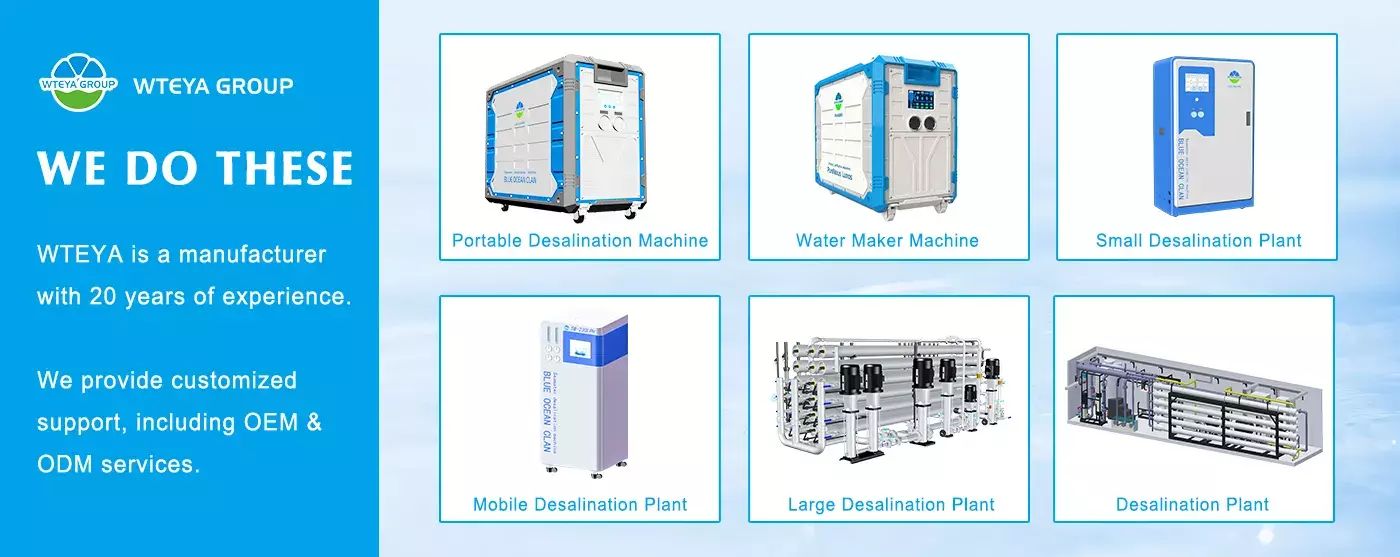
• OEM & ODM customization available
Become a WTEYA Distributor!
We are expanding global partnerships:
• Preferential policies
• Professional training
• Full technical support
Let us help you achieve exceptional water quality and operational sustainability!
📲 WhatsApp: +86-1800 2840 855
📧 Email: info@wteya.com
🌐 Website: www.wteya.com
Previous: Is Chemical Defluoridation Alone Enough for Semiconductor Fluoride Wastewater Treatment?
Next: No More