






Deep Dive into Energy Consumption Issues in Seawater Desalination Plants and WTEYA's Efficient Solutions
As global pressure on water resources continues to increase, the demand for fresh water in coastal cities and arid regions is growing. Seawater desalination has become a crucial solution to meet this demand. However, in practice, seawater desalination plants face challenges related to high energy consumption and operational costs. These issues not only affect the economic benefits of enterprises but also limit the expansion and application of desalination plants in more regions. To address these challenges, WTEYA has leveraged years of technological accumulation and combined efficient RO systems, intelligent control, pressure recovery, and renewable energy integration to provide low-energy, high-stability, and sustainable seawater desalination solutions. This ensures the stability and reliability of the output water quality for both industrial and municipal users.
Seawater Desalination Technologies: RO vs. Thermal Distillation
Seawater desalination technologies primarily include Reverse Osmosis (RO) technology and thermal distillation processes (such as Multi-Effect Distillation and Multi-Stage Flash Distillation). RO technology involves pressurizing seawater through a semi-permeable membrane, allowing water molecules to pass through while blocking salts and contaminants. This process is modular, flexible in deployment, and highly efficient, making it ideal for distributed applications. In contrast, thermal processes rely on evaporation and condensation principles to produce water, suitable for large-scale centralized water supply and capable of utilizing industrial waste heat or district heating to reduce operational costs.
Each technology has unique characteristics in terms of energy consumption, operational modes, and maintenance requirements. Therefore, selecting the appropriate technology requires comprehensive consideration of application scenarios, energy conditions, and water quality demands.
Factors Affecting Energy Consumption in Seawater Desalination Plants
Energy consumption in seawater desalination plants is influenced by various factors, including feed water quality, equipment efficiency, and operating modes. The complexity and salinity of feed water directly affect the operating pressure of high-pressure pumps and membrane cleaning frequencies. The performance of equipment, including pumps, membrane components, and heat exchange systems, significantly impacts energy consumption. Additionally, variations in operating modes and load fluctuations can lead to increased energy use. To optimize energy consumption and improve efficiency, the key lies in rational process layout and scientific system operation strategies.
Modern Technologies for Improving Energy Efficiency
To enhance energy efficiency, modern systems typically employ several technological methods. For example, RO systems can integrate pressure recovery devices, low-energy high-flux membrane components, and intelligent control technology to dynamically adjust operation based on water quality and flow. This helps reduce overall energy consumption. Thermal processes, on the other hand, optimize thermal energy use through multi-effect evaporation and waste heat recovery, minimizing unnecessary fuel consumption. Additionally, integrating renewable energy sources like solar photovoltaics, wind energy, or industrial waste heat provides energy support, allowing desalination plants to operate in a low-carbon mode, especially in energy-scarce or remote areas.
Intelligent control systems enable real-time monitoring and predictive maintenance, ensuring high-efficiency operations and energy optimization, thus guaranteeing system stability and reliability.
WTEYA's Energy-Efficient Seawater Desalination Systems
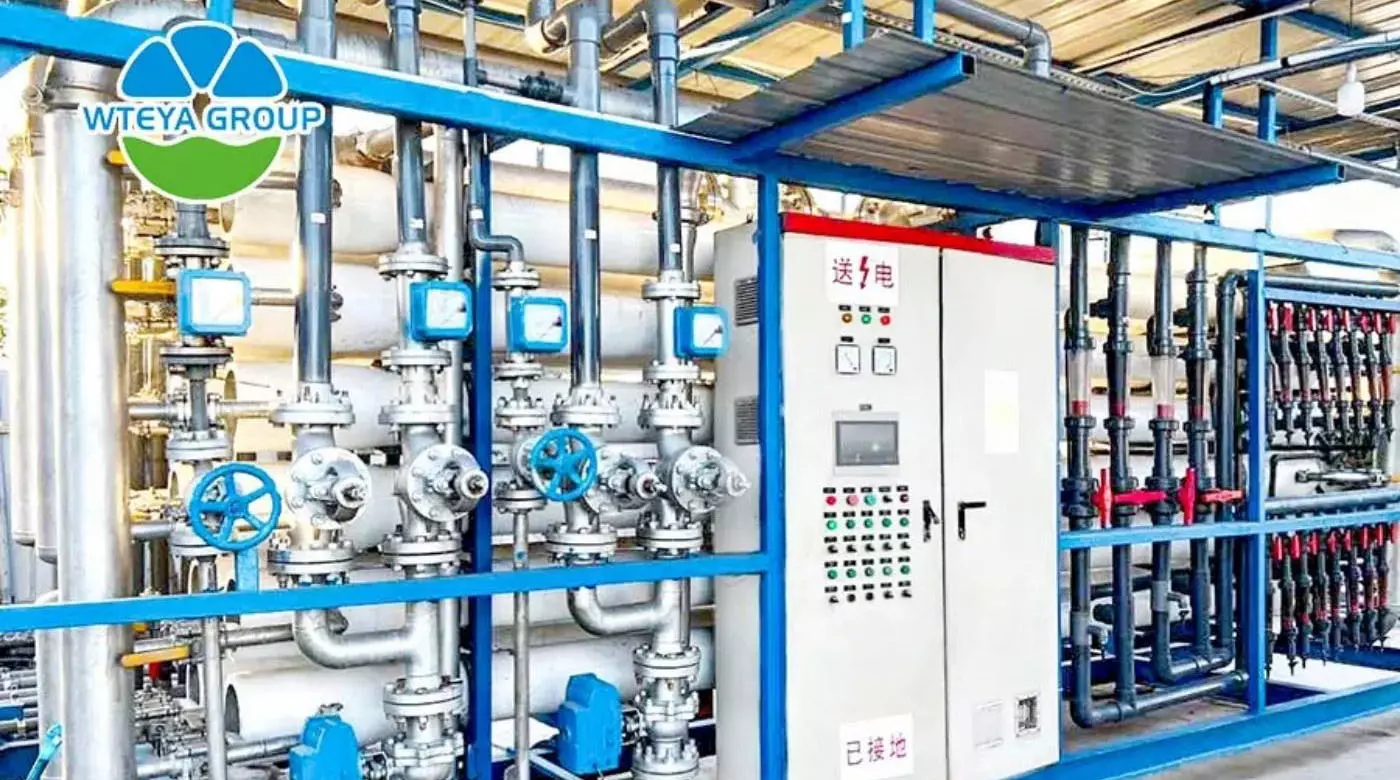
In practice, WTEYA’s seawater desalination systems demonstrate the advantages of these energy-saving strategies. In industrial parks or coastal communities, modular RO systems can be flexibly expanded based on water demand, utilizing intelligent control and pressure recovery technologies for efficient energy use while maintaining stable output water quality. The system design not only meets industrial and domestic water needs but also integrates renewable energy, supporting low-carbon management and independent operation in remote areas. In urban community applications, WTEYA’s systems can flexibly allocate water treatment capacity to achieve synchronized management of domestic wastewater treatment and drinking water supply. Remote monitoring reduces manual intervention, enhancing system reliability and operational efficiency.
Future Trends: Intelligent, Modular, and Renewable-Powered Desalination
The future development of seawater desalination plants will focus on intelligent, modular, and renewable energy integration. By optimizing pump and membrane operation through big data and intelligent algorithms, combined with hybrid process technologies, both water quality and energy efficiency can be balanced. Modular, distributed deployments can meet varying scales and demands, alleviating energy consumption pressures caused by local load peaks. Renewable energy-driven systems will provide low-carbon or even zero-carbon operation modes, ensuring sustainable water management for industrial, urban, and remote areas.
When planning seawater desalination plants, companies should prioritize energy-efficient designs, intelligent control, renewable energy integration, and modular expansion to ensure long-term sustainable operations while guaranteeing water quality.
Conclusion: Overcoming Energy Consumption Challenges in Seawater Desalination
In conclusion, the energy consumption issue in seawater desalination plants is a core challenge limiting their widespread application. However, through optimized RO systems, pressure recovery, intelligent control, renewable energy integration, and modular design, energy consumption can be effectively reduced, efficiency can be improved, and output water quality can remain stable. WTEYA’s seawater desalination equipment combines these technologies to offer industrial and municipal users efficient, reliable, and sustainable freshwater solutions. Against the backdrop of global green, low-carbon, and sustainable development, seawater desalination plants are not just water treatment devices but also strategic tools for future water resource management.
Why Partner with WTEYA?
• Nearly 20 years of industry experience
• Trusted by global leaders including Foxconn, Huawei, Ganfeng Lithium, Ronbay Technology
• 100+ success cases worldwide
• OEM & ODM customization available
Become a WTEYA Distributor!
We are expanding global partnerships:
• Preferential policies
• Professional training
• Full technical support
Let us help you achieve exceptional water quality and operational sustainability!
📲 WhatsApp: +86-1800 2840 855
📧 Email: info@wteya.com
🌐 Website: www.wteya.com