






MVR Evaporator vs Crystallizer: Process Integration
When a factory treats high-salinity wastewater, engineers often weigh two technologies against each other: an MVR evaporator that concentrates the brine, and an evaporative crystallizer that turns the final concentrate into solid salt. In a well-designed plant, however, these two machines are not competitors at all. In a mature zero liquid discharge (ZLD) system, the MVR evaporator and the crystallizer operate as one integrated process train, and total water recovery can exceed 95%. This article explains what each unit does, where they differ, and why process integration is the key to stable, low-cost salt recovery.
⚙️ What an MVR Evaporator Does
An MVR (Mechanical Vapor Recompression) evaporator removes water by boiling wastewater under vacuum and reusing the steam it produces. A roots, centrifugal or screw compressor raises the temperature of the secondary steam by 5-20℃ and sends it back to the heating chamber, so the latent heat is recycled instead of being discharged. Because of this closed steam loop, an MVR evaporator saves 60%-70% of the energy used by a single-effect evaporator and 30%-40% compared with a triple-effect system, with power consumption of only 30-80 kWh per ton of water evaporated.
The job of the MVR unit is concentration: it turns a large volume of dilute brine into a much smaller volume of concentrated liquid, while clean condensate is recovered for reuse. Inside a ZLD train, the MVR stage typically cuts the brine volume by more than 90%, which makes every downstream step smaller, cheaper and easier to control.
🔬 What an Evaporative Crystallizer Does
An evaporative crystallizer takes over where a plain evaporator must stop. As brine approaches saturation, further concentration becomes risky because salts start to precipitate on heat-transfer surfaces and cause scaling. The crystallizer is engineered for exactly this regime: it evaporates the remaining water under forced circulation until the solution becomes supersaturated, so salt crystals form and grow in the liquid instead of scaling the equipment.
The crystal slurry is discharged and dewatered by a centrifuge or filter, producing solid salt that can be reused, sold or safely disposed of, while the mother liquor returns to the evaporator or crystallizer for further processing. By recycling the mother liquor, an integrated system maximizes salt yield and leaves almost no liquid waste behind.
⚖️ MVR Evaporator vs Crystallizer: Different Jobs in One Train
The practical difference between an MVR evaporator and a crystallizer is one of duty, not of quality. The evaporator is optimized for bulk water removal at the lowest possible energy cost, operating with a high circulation rate and a moderate temperature rise to protect the heating surfaces. The crystallizer is optimized for the final concentration step, where solids must form in a controlled way: it runs with forced circulation and a dedicated heating arrangement so that crystals grow on themselves rather than on the tube walls.
Neither unit alone can deliver true zero liquid discharge for a high-salinity stream. If the process stops at the evaporator, a concentrated liquid still remains for disposal; if raw wastewater is fed straight into a crystallizer, energy consumption and scaling risk become unmanageable. That is why the standard engineering answer is integration: membrane concentration first, then MVR evaporation, and crystallization as the finishing stage.
🔄 How Integrated Evaporation and Crystallization Work
A complete evaporation-crystallization train follows a staged logic. Pretreatment removes hardness, silica and suspended solids to protect the downstream units. The membrane concentration stage desalts and recycles water at a 70%-90% recovery rate; the MVR evaporator then cuts the remaining brine volume by more than 90%; and the crystallization stage converts the final concentrate into solid salt plus condensate that is returned to the process. Because every stage feeds the next one, the total recovery rate is the product of the whole train, which is why mature systems routinely exceed 95% overall water recovery.
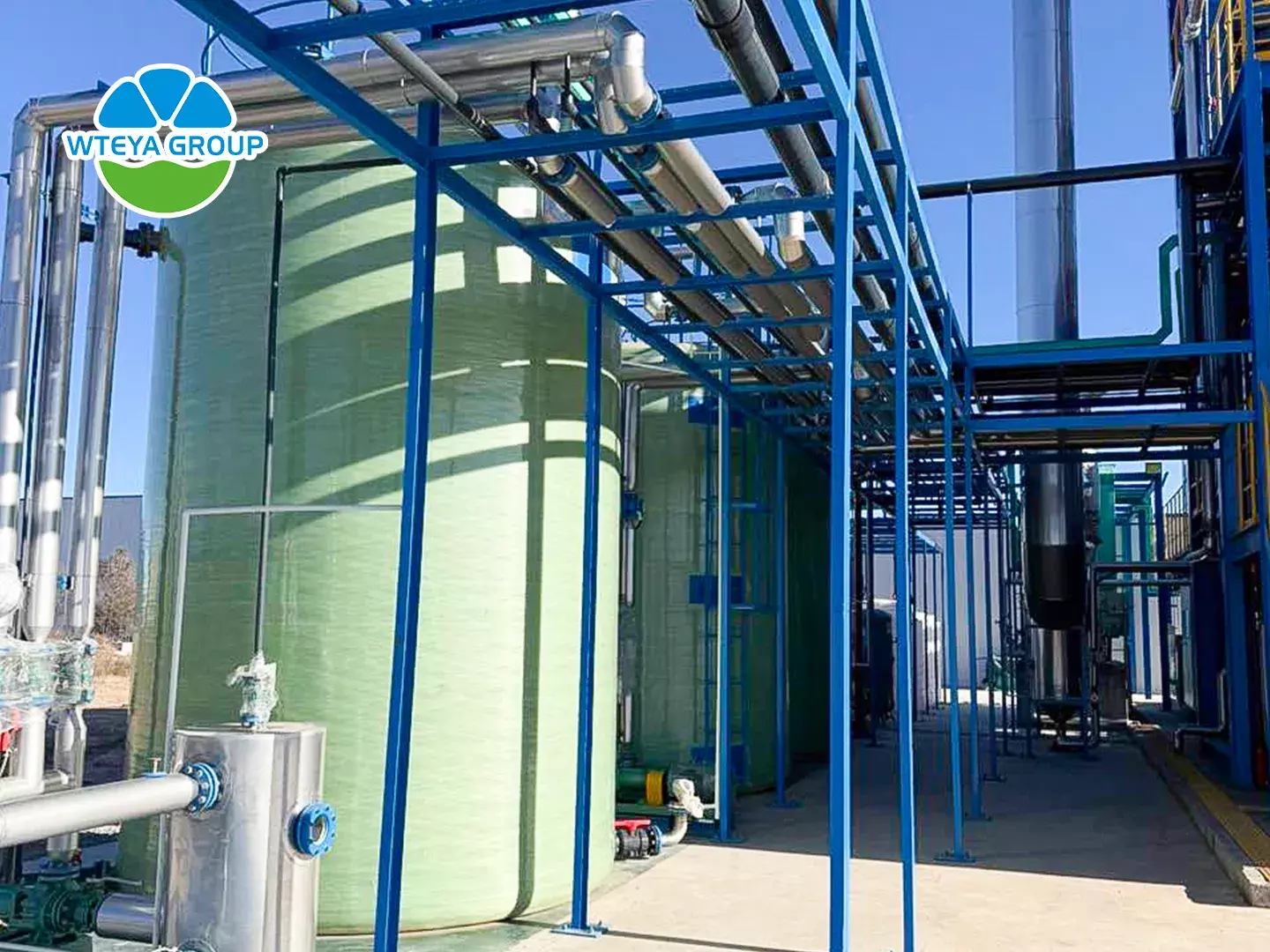
The same train can be arranged for salt separation. When the wastewater contains mixed salts, staged crystallization recovers different products one by one, for example sodium sulfate and sodium chloride in chemical streams, or valuable salts in lithium battery and salt-lake brine projects. WTEYA designs the evaporation and crystallization stages together and selects materials such as 316L stainless steel, 2205 duplex stainless steel or titanium according to the chloride level and pH of each stream, so the train keeps running without frequent shutdowns for descaling.
🏭 Applications of Evaporation-Crystallization Integration
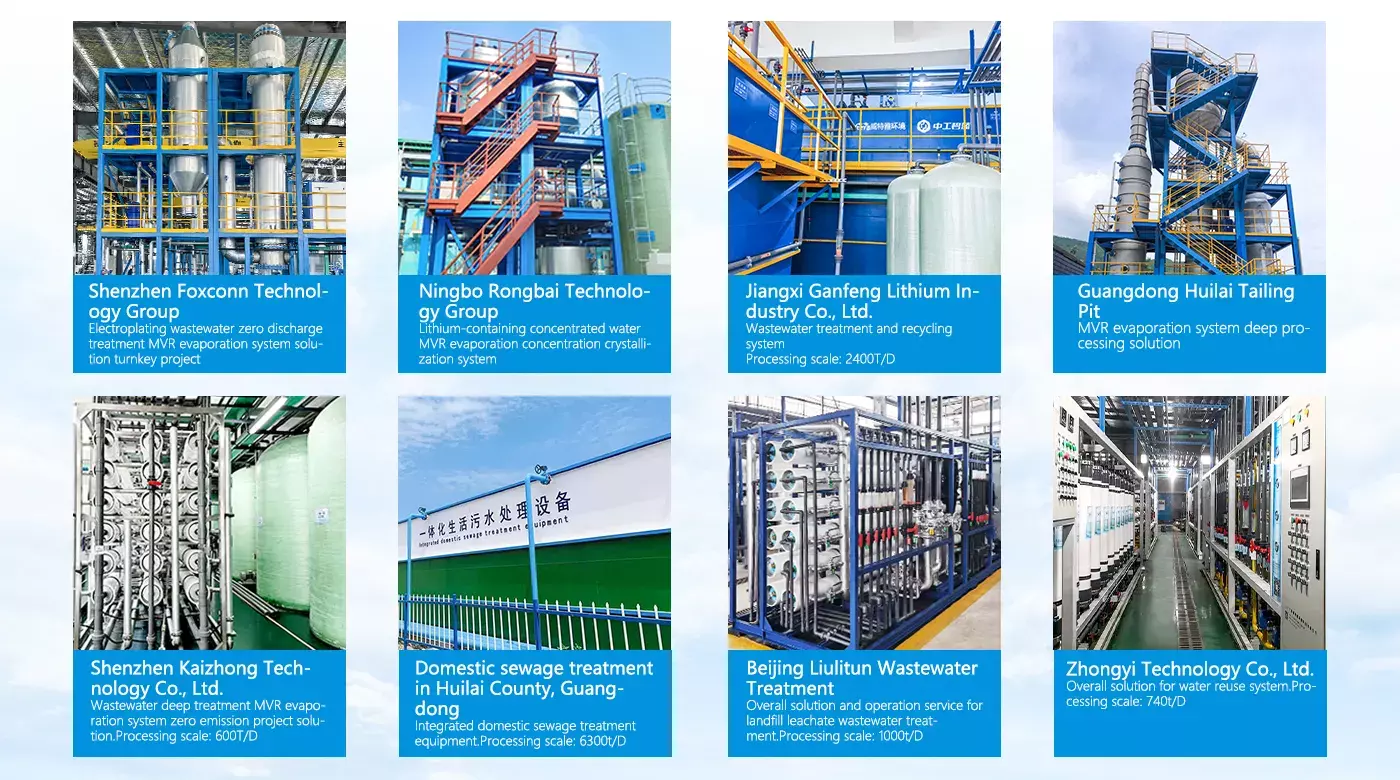
Integrated MVR evaporation and crystallization systems are applied wherever liquid discharge must be minimized and salts recovered as products. Typical projects include landfill leachate concentrate treatment, electroplating and PCB wastewater, lithium battery recycling and cathode material production, rare earth processing, chemical and fertilizer plants, metallurgical wastewater and salt-lake lithium extraction. In every case the goal is the same: recover clean water for reuse, separate salts as solid products, and eliminate liquid discharge from the plant.
Systems are customized from small pilot units to large plants handling hundreds of tons of feed water per day. Fully automatic PLC control, remote monitoring and skid-mounted layouts keep installation periods short and operating labor to a minimum.
💡 Why Choose WTEYA
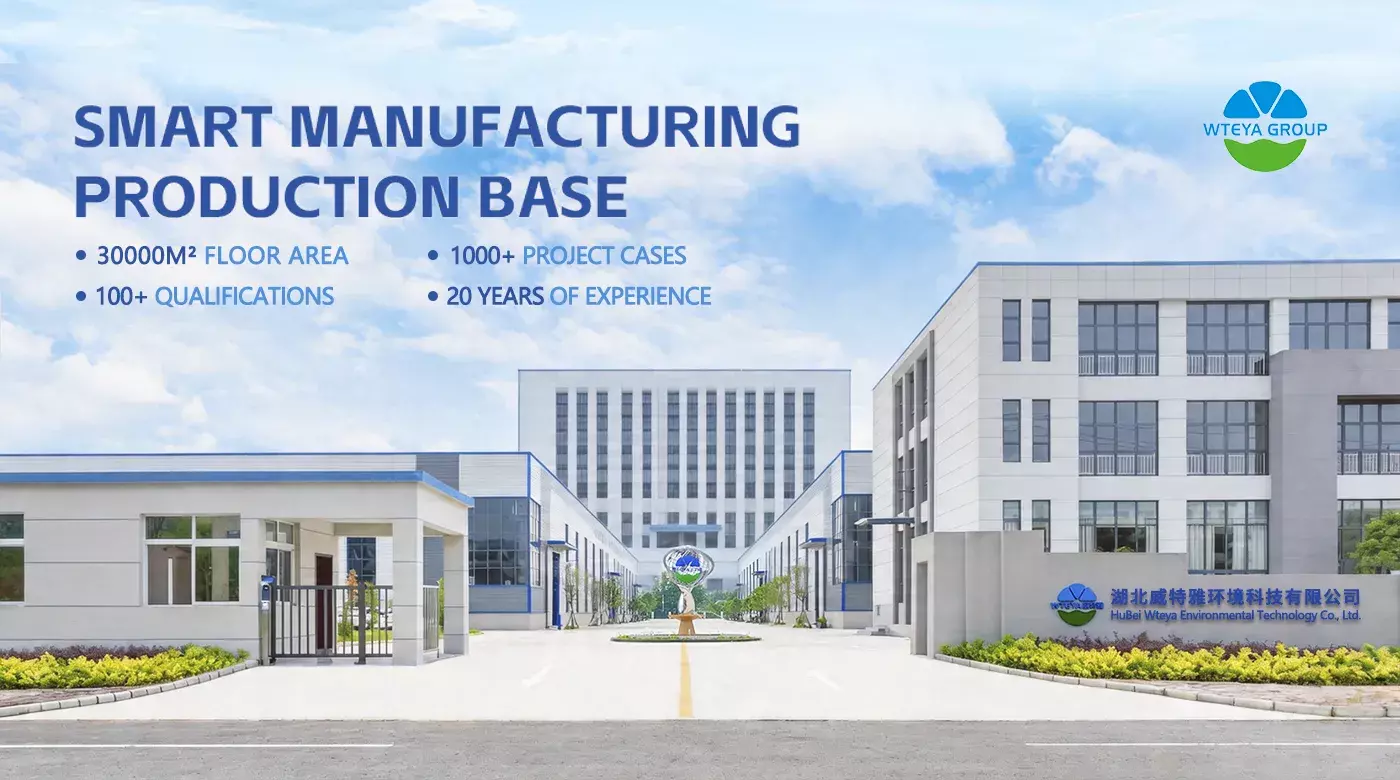
WTEYA has designed and built evaporation and crystallization systems for nearly 20 years, serving more than 2,000 clients across 30+ provinces and regions. Because we manufacture both the MVR evaporator and the crystallization stage ourselves, the two units are engineered as one train from the start, matched on circulation rate, heating area, compressor duty and control logic, instead of being assembled from different suppliers. Every system is customized according to the actual water quality and site conditions, and we support projects with process testing, installation guidance and responsive after-sales service.
❓ Frequently Asked Questions
What is the difference between an MVR evaporator and a crystallizer?
An MVR evaporator concentrates wastewater by boiling off water and reusing the steam, making it the energy-efficient workhorse for bulk water removal. An evaporative crystallizer finishes the job by evaporating the remaining water until the solution becomes supersaturated, so salts leave the system as solid crystals. In a zero liquid discharge plant they are combined into one train: the MVR unit cuts the brine volume by more than 90%, and the crystallizer produces the final solid salt.
How much water can an integrated evaporation-crystallization system recover?
A mature integrated system recovers 95% or more of its water. The membrane stage typically recycles 70%-90% of the water first, the MVR evaporator then reduces the remaining brine volume by more than 90%, and crystallization converts the final concentrate into solid salt plus condensate that returns to the process, so no wastewater leaves the plant.
How long does an MVR evaporator last?
An MVR evaporator is designed for a service life of 15-20 years, and many WTEYA units have been running steadily for more than 20 years. The vapor compressor typically lasts 10-15 years with scheduled maintenance, while the heat-exchange tube bundle serves 5-12 years depending on chloride level and scaling control: 316L stainless steel suits low-chloride streams, and 2205 duplex stainless steel or titanium is used for high-chloride wastewater.
WTEYA is a professional evaporation equipment manufacturer with nearly 20 years of experience. We provide customized MVR evaporation and crystallization solutions and full OEM & ODM services for your specific wastewater requirements.
📲 WhatsApp: +86-1800 2840 855
📧 Email: info@wteya.com
🌐 Website: www.wteya.com