







Why Do We Need Zero Liquid Discharge (ZLD) for Wastewater?
1. An Increasingly Critical Challenge
For decades, industrial wastewater treatment has been guided by a simple principle: “meet discharge standards and release.” As long as effluent meets national or local regulations, it can be discharged into natural water bodies.
However, this logic is being fundamentally reshaped by two irreversible trends:
Stricter environmental regulations:
Emission limits are continuously tightening. In some river basins, standards have already reached near Class III surface water quality, making traditional treatment processes increasingly insufficient.
Limited discharge quotas:
Industrial parks in many regions now enforce strict total pollutant load control. New projects cannot obtain discharge permits, while existing facilities face quota reductions.
This leads to a paradoxical situation:
Even if wastewater is fully treated to meet standards, it still cannot be discharged without allocation quotas. In some areas, municipal pipelines are saturated, meaning compliant effluent has nowhere to go.
This is no longer a technical issue—it is a capacity constraint. The only viable solution is to eliminate external wastewater discharge entirely.
2. What Is True Zero Liquid Discharge?
A common misconception must be clarified:
ZLD does not mean zero wastewater generation—it means zero liquid discharge into the environment.
According to Wteya (Weiteya), Zero Liquid Discharge is defined as:
Industrial water is reused repeatedly, with salts and pollutants highly concentrated. Over 99% of water is recovered and reused, with no liquid effluent discharged outside the facility.
Dissolved salts and contaminants are converted into solid waste for landfill disposal or resource recovery as chemical raw materials.
In engineering terms, this means:
Clean water and solid residues exit the system—no liquid leaves the plant boundary.This forms a closed-loop material cycle, not merely compliance with discharge standards.
3. Core Process: High-Pressure Membrane + MVR Evaporation Crystallization
Based on extensive engineering practice, Wteya has developed a reliable and cost-effective ZLD process centered on:
High-Pressure Membrane Concentration + Mechanical Vapor Recompression (MVR)
This system is widely applied in industries such as electroplating, coatings, metal processing, PCB manufacturing, and oil production.
Full Process Overview
Step 1: Pre-treatment + Ultrafiltration (UF)
Wastewater is first treated via biological or physicochemical processes, then enters ultrafiltration to remove suspended solids, colloids, and macromolecules. This protects downstream membranes.
Step 2: Spiral-Wound RO Concentration
UF permeate enters reverse osmosis (RO) systems. Clean permeate is reused, while concentrate proceeds to further concentration stages.
Step 3: High-Pressure Membrane Deep Concentration
High-pressure membranes further reduce water volume. The permeate is recycled as clean water, while only a small fraction of high-salinity concentrate is sent to MVR.
At this stage, over 99% of water has already been recovered.
Step 4: MVR Evaporation & Crystallization (Final ZLD Stage)
The final concentrate enters the MVR system for evaporation crystallization.
• Vapor is compressed and reused as heat energy, significantly reducing energy consumption compared to conventional evaporation.
• Condensate: high-quality water suitable for reuse or polishing treatment.
• Solid crystals: discharged as solid waste for disposal or resource recovery.
4. Why Does This Integrated Process Work?
The combination of high-pressure membrane + MVR evaporation is effective because:
• Membranes separate water from pollutants with low energy consumption, recovering most of the water.
• MVR handles the final highly concentrated brine, fully solidifying residual contaminants.
Most pollutants and salts are ultimately transferred into solid residues, while both membrane permeate and MVR condensate achieve high water quality. This is the fundamental reason ZLD can achieve both compliance and water reuse value.
5. Why Is ZLD Becoming Mandatory Now? Five Driving Forces
1. Regulatory Pressure: No discharge quota = no discharge right
Even treated water cannot be discharged without allocated quotas. ZLD removes dependence on discharge permits.
2. Environmental Enforcement: From “exceeding limits” to “tracking discharge pathways”
Regulators now focus on illegal discharge routes, brine dumping, and hidden seepage. ZLD ensures full traceability.
3. Rising Water Costs
Industrial water prices continue to rise in water-scarce regions. ZLD reduces freshwater intake by 90–99%, significantly lowering long-term costs.
4. Resource Recovery Value
Pollutants such as salts and metals are transformed into recoverable resources, enabling potential secondary economic value.
5. Corporate ESG and Green Competitiveness
ZLD has become a key indicator of environmental responsibility, improving ESG performance and corporate reputation.
6. Wteya’s Differentiated Value
Wteya’s ZLD approach is not simply equipment stacking but an integrated engineering methodology:
• Front-end minimization strategy: Membrane systems reduce feed volume so that MVR handles only 5–15% of total flow.
• System coupling design: Membrane concentrate quality is precisely matched with MVR requirements to prevent scaling and inefficiency.
• Industry-specific optimization: Customized cleaning and treatment strategies for electroplating, PCB, and coating industries.
7. Key Industry Applications
| Industry | Wastewater Characteristics | ZLD Value |
|---|---|---|
| Electroplating | High heavy metals, high salinity | Metal recovery + water reuse |
| Coatings | High COD, high color, difficult degradation | Reduced hazardous waste |
| Metal surface treatment | Acidic, high salt | Salt crystallization recovery |
| PCB manufacturing | High copper, COD, ammonia | Copper recovery + reuse |
| Oil production | High salinity, oily wastewater | Re-injection or reuse |
Conclusion:
Five years ago, Zero Liquid Discharge was considered a high-end solution mainly used in water-scarce or sensitive regions. Today, due to tightening discharge quotas, stricter environmental enforcement, and rising water costs, ZLD is rapidly shifting from an optional solution to a mandatory requirement.
Wteya’s conclusion is clear:
In the next five years, enterprises without ZLD capability will face increasing operational risks—not because the technology is unavailable, but because discharge capacity is no longer guaranteed.
The essence of ZLD is not simply purifying water further, but eliminating dependency on environmental discharge entirely.
When the traditional “compliant discharge” pathway is blocked by total emission controls, only one direction remains:
No discharge at all.
That is why Zero Liquid Discharge is becoming essential.
Why Partner with WTEYA?
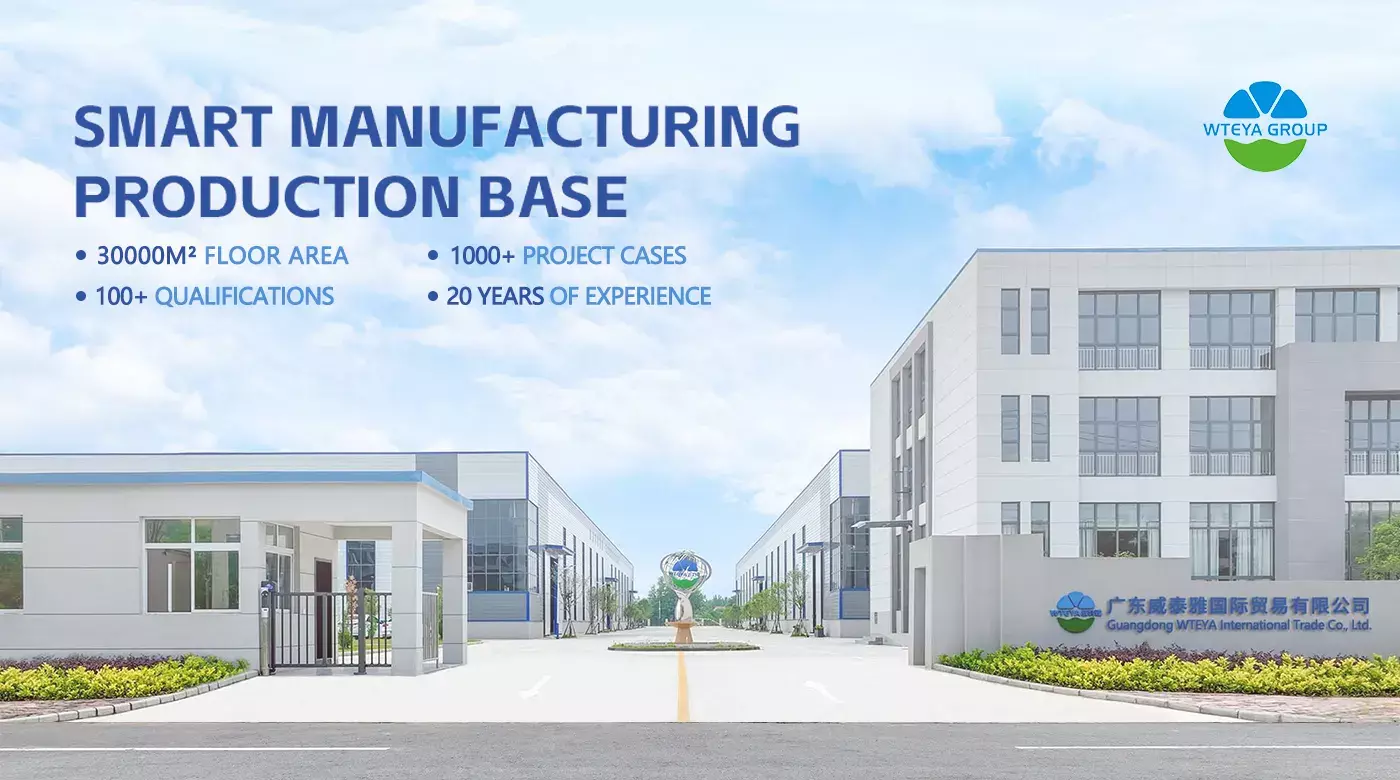
• Nearly 20 years of industry experience
• Trusted by global leaders including Foxconn, Huawei, Ganfeng Lithium, Ronbay Technology
• 100+ success cases worldwide
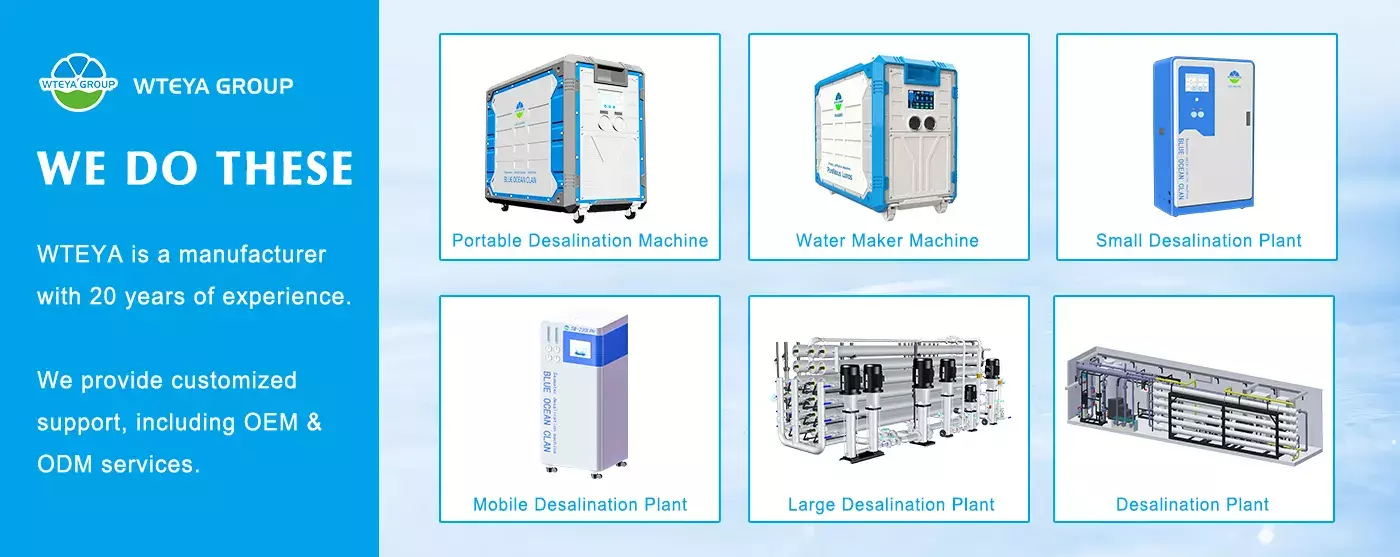
• OEM & ODM customization available
Become a WTEYA Distributor!
We are expanding global partnerships:
• Preferential policies
• Professional training
• Full technical support
Let us help you achieve exceptional water quality and operational sustainability!
📲 WhatsApp: +86-1800 2840 855
📧 Email: info@wteya.com
🌐 Website: www.wteya.com
Previous: What Are the Core Challenges of Landfill Leachate Treatment?
Next: No More