







MVR Evaporator for Textile Dyeing Wastewater Recovery
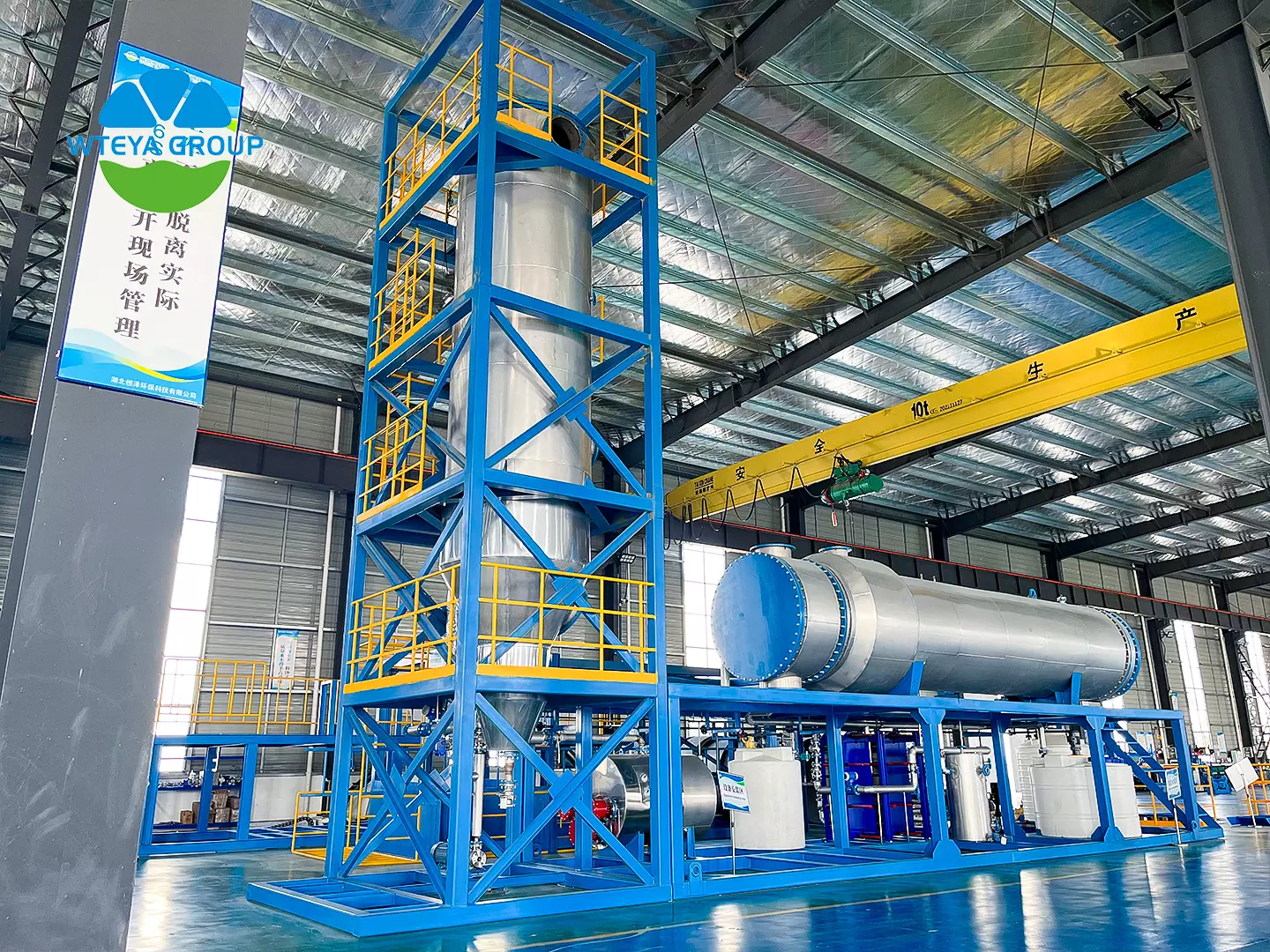
Few industrial effluents are as stubborn as the water leaving a textile dyeing and finishing line. It carries intense colour, a high organic load, an alkaline pH and — because reactive dyeing uses salt to drive the dye onto the fibre — a dissolved-salt concentration that biological treatment alone cannot remove. Evaporation is the step that closes the loop, and the MVR evaporator is the machine that makes that step affordable to run.
This article looks at why dyeing wastewater resists conventional treatment, how an MVR evaporator processes it, what can be recovered at the outlet, and what the energy figures actually look like.
⚙️ Why Dyeing Wastewater Resists Conventional Treatment
Dyeing and printing wastewater is not one stream but many. Batch dyeing, washing, mercerising and finishing each contribute their own cocktail, so both flow and composition swing through the working day. The organic load is high, colour remains visible even at low concentration, and much of the dyestuff is engineered to resist breakdown.
The harder problem is salinity. Reactive dyeing fixes colour with large quantities of salt, commonly sodium sulphate or sodium chloride, so the spent liquor may carry a salt load well above what a biological system tolerates. Salts are not biodegradable — no activated-sludge tank removes them — while limits on chloride and total dissolved solids keep tightening.
Colour and salts together make dyeing wastewater a natural candidate for evaporation: the water can be distilled off clean, while the dissolved solids are concentrated and, where the plant wants it, crystallised into a solid salt.
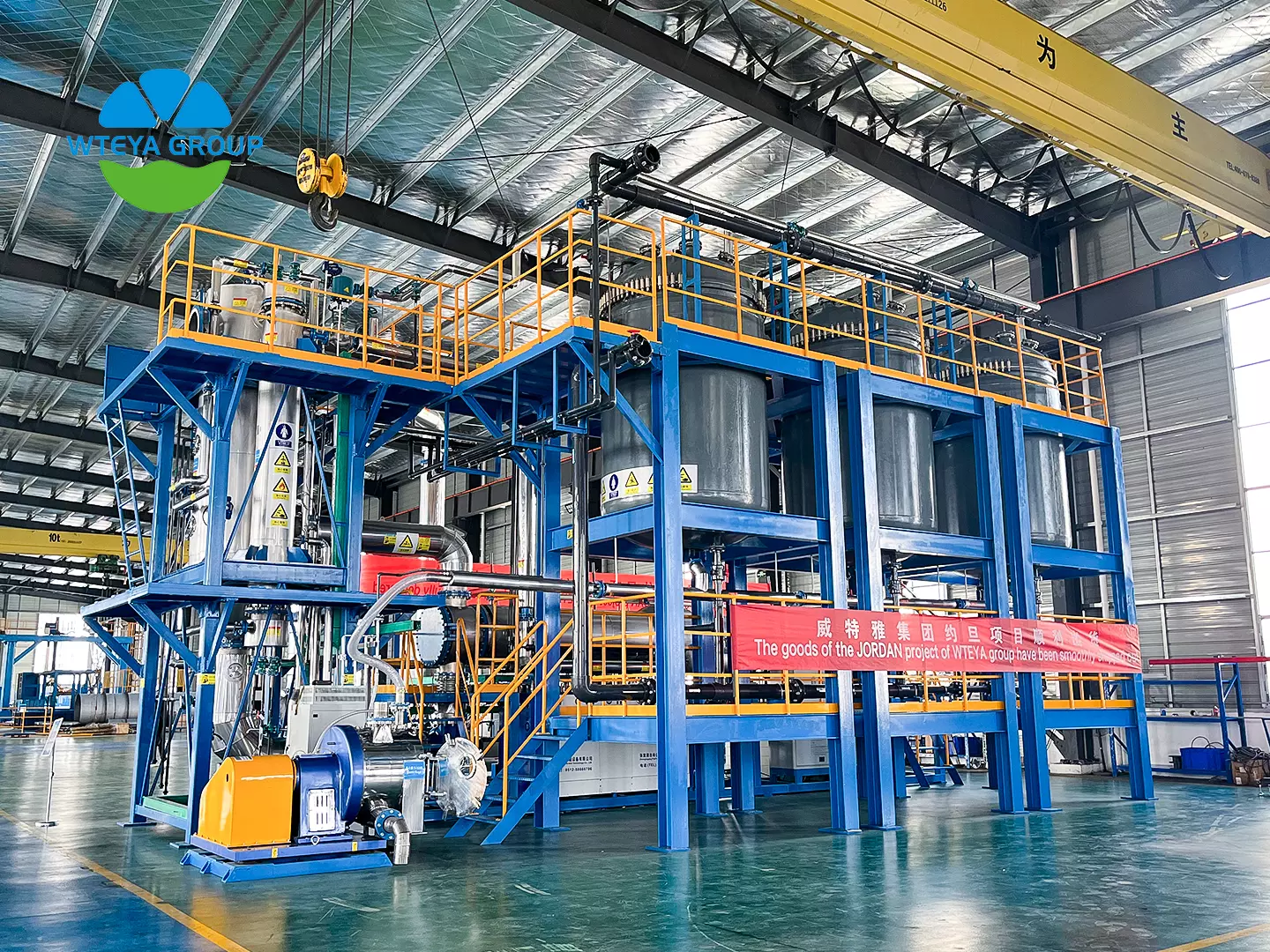
🔧 How an MVR Evaporator Treats Dyeing Wastewater
Step 1 — Equalisation and pretreatment. Because batch cycles vary, buffer tanks flatten the flow, and coagulation, biological treatment or ultrafiltration strip suspended solids and a large part of the COD before the water reaches the evaporator. Protecting the heat exchangers at this stage is what keeps availability high.
Step 2 — Evaporation in a closed loop. In an MVR evaporator, the vapour boiled off the wastewater is recompressed and returned as the heating medium for the same liquid. The unit therefore runs on electricity rather than on a steam supply: the latent heat is recycled internally instead of being thrown away in a condenser.
Step 3 — Distillate and concentrate. The evaporated water leaves as clean condensate, while the brine is drawn off at a controlled concentration — either as a liquid concentrate for further treatment, or fed to a crystalliser for solid salt.
💡 Recovering Water, Heat and Salt
The payoff of evaporation is that nothing has to be wasted. The condensate from an MVR evaporator is close to distilled water — conductivity typically below 10 µS/cm — which makes it suitable for washing, rinsing, cooling-tower makeup or, after polishing, boiler feed. It is the same stream that lifts overall water treatment systems recovery above 95%.
Heat is recovered in two places: internally, through the vapour recompression loop; and externally, by using hot condensate and concentrate to pre-heat the incoming feed. Together they reduce the supplementary steam required to a small fraction of that needed by a conventional train.
Where salt recovery pays, a crystalliser coupled to the evaporator produces a solid salt of 97% or higher purity that can be reused or sold — turning a disposal cost into a by-product.
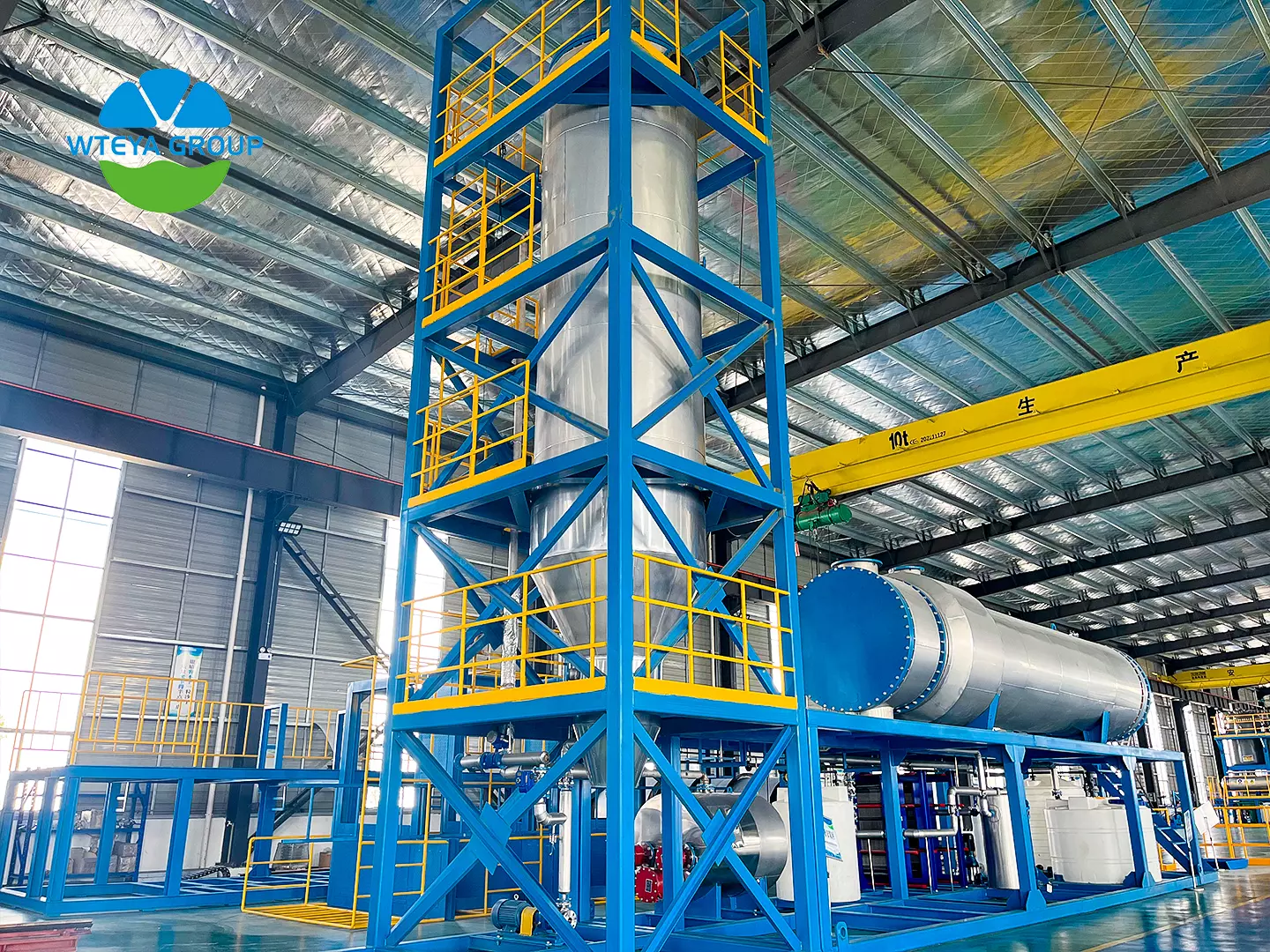
📊 The Energy Case for MVR
Multi-effect evaporation is driven by steam, and steam has to be raised somewhere. A single-effect evaporator consumes roughly 1.1 to 1.3 tonnes of steam per tonne of water; a double-effect unit about 0.57 tonnes; a triple-effect about 0.4 tonnes. Each tonne of steam carries the latent heat of the process, yet a well-designed MVR loop needs only 20 to 40 kJ/kg of compression work — a tiny fraction of the 2,260 kJ/kg of latent heat it recycles.
In practice, an MVR system treats a tonne of wastewater for about 30 to 80 kWh of electricity. Measured against a conventional multi-effect evaporator train that is an energy saving of 60% to 70%, and the energy it removes is largely fossil-fired steam — which is what makes the technology interesting to any plant carrying a carbon target.
Inside the machine, the compressor takes 60% to 70% of the power, the circulation pump 15% to 20% and the vacuum pump roughly 5% to 10%. Because the compressor dominates, matching it to the real flow and compression ratio matters more than any other single choice, and a PLC-controlled unit that trims compressor speed to the actual load can find a further 5% to 10%.
🏭 Where It Fits in a Dyeing Plant
Most projects do not evaporate the whole effluent. Biological treatment and membrane preconcentration carry the bulk of the flow cheaply, and evaporation is applied only to the concentrated reject — the stream that would otherwise decide the plant's discharge compliance. This hybrid layout keeps both capital and running cost down.
The same section also absorbs streams the biological train cannot: spent dye liquors, desizing wash water and the concentrated brine from membrane cleaning. For plants pursuing zero liquid discharge, the evaporator-crystalliser is the final barrier between the factory and the outfall.
Systems are delivered as compact skids where floor space is tight, or as multi-unit trains for larger flows, with the evaporator sized around the actual salt load rather than the nominal throughput.
🏆 Why Choose WTEYA
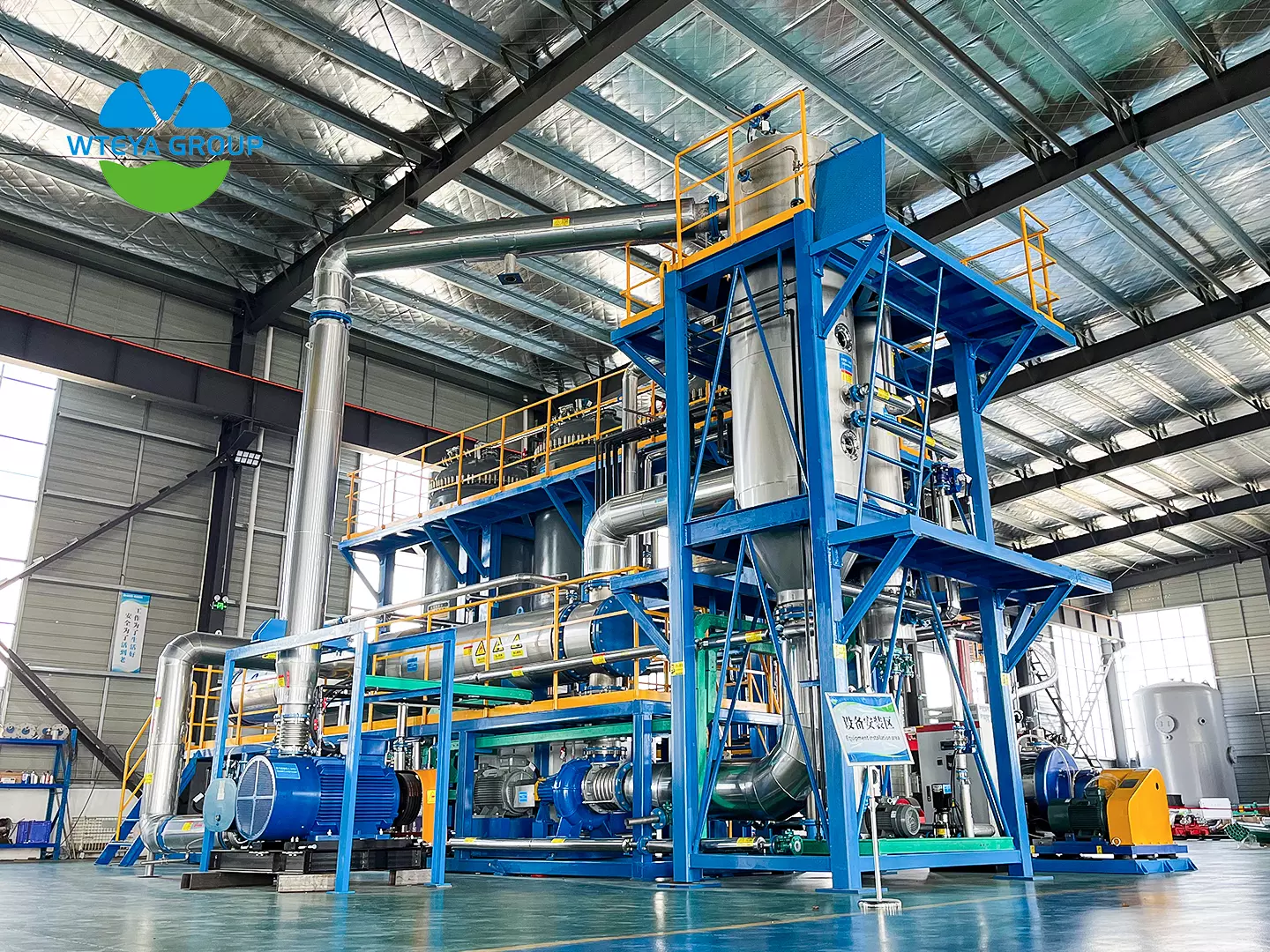
WTEYA has close to 20 years of experience in evaporation and crystallisation, with more than 2,000 clients served across 30-plus provinces. For dyeing projects the sizing question is specific: the dye class, the salt used, the COD-to-salt ratio and the batch pattern all change the design, so we work from a water sample and the plant's real operating cycle rather than from a catalogue figure.
Scope covers water treatment systems from process design and manufacture through installation, commissioning and operator training, and we support OEM and ODM programmes for partners who need equipment built to their own specification.
❓ Frequently Asked Questions
Can an MVR evaporator handle dyeing wastewater with very high salt content?
Yes — high salinity is exactly the case where evaporation outperforms biological treatment, because dissolved salts are not biodegradable. The practical limit is set by the salt's solubility and by the materials chosen for the heat exchangers, so pretreatment and metallurgy are matched to the actual liquor rather than to an average.
How much water can be recovered from dyeing wastewater?
In a hybrid membrane-plus-evaporation layout, overall recovery can exceed 95%. The condensate leaves the evaporator at a conductivity of around 10 µS/cm and is clean enough to return to washing or rinsing, which is what allows the water balance to close.
Is MVR cheaper to run than a steam-heated evaporator?
For a plant without cheap waste steam, generally yes. MVR needs roughly 30 to 80 kWh per tonne of water and no steam boiler, saving 60% to 70% of the energy a multi-effect train would consume — and it removes the emissions associated with raising that steam.
Schedule a video call with our engineers to explore your options.
WTEYA is a professional evaporation equipment manufacturer with nearly 20 years of experience. We provide customized solutions and full OEM & ODM services.
📲 WhatsApp: +86-1800 2840 855
📧 Email: info@wteya.com
🌐 Website: www.wteya.com
Previous: Why Does Copper-Containing Wastewater from PCB Plants Still Fail to Meet Discharge Standards?
Next: No More