






What Are the Most Commonly Underestimated Risks in Hazardous Wastewater Treatment Projects?
In hazardous wastewater treatment projects, many failures or operational difficulties are not caused by completely wrong process routes or improper equipment selection. Instead, they arise from seemingly minor risks that, over long-term operation, are magnified. These risks often do not appear significant during the design and feasibility stages but gradually manifest as unstable operation, uncontrolled energy consumption, or compliance issues once the system is in operation.
Based on extensive engineering practice, the most commonly underestimated risk in hazardous wastewater treatment projects is not a single issue but a systemic underestimation of wastewater complexity, process variability, and long-term operating conditions. ⚠️
1. Underestimating the Complexity of Wastewater Composition 🔬
During the early stages of hazardous wastewater projects, wastewater characterization is typically based on limited sampling and analysis. In reality, industrial wastewater is rarely uniform; its composition fluctuates with raw material changes, process adjustments, and production cycles.
In many projects, design assumptions focus on "main pollutants," such as high salinity, high COD, or specific inorganic components, while ignoring trace toxic substances, reactive compounds, or scale-forming ions that may accumulate in the system. These substances may not be significant under normal temperature or low concentrations, but their chemical behavior can change under evaporation, concentration, or high-temperature conditions, causing scaling, corrosion, or phase separation.
Thus, the “hazard” of wastewater is not revealed by single tests but by the unpredictable long-term effects of composition changes and enrichment. WTEYA emphasizes systematic evaluation of wastewater based on this engineering experience.
2. Underestimating Long-Term Operational Variability ⚙️
Many hazardous wastewater projects focus on whether the system meets standards under "design conditions," rather than whether the system remains controllable under deviations. In practice, situations like the following are almost unavoidable:
• Periodic fluctuations in influent concentration
• Intermittent water flow or shock loads
• Significant seasonal temperature changes
• Occasional high-toxicity or high-salinity wastewater discharges
For hazardous wastewater systems, failure to account for these variations can amplify risks during operation. Systems with evaporation or concentration processes are especially sensitive; insufficient adjustment capacity can lead to operational fragility. Continuous operation, load adaptability, and automatic regulation often matter more than single treatment efficiency indicators. 📉
3. Underestimating “Chronic Issues” Like Scaling and Corrosion 🧱
Scaling and corrosion are nearly inevitable in hazardous wastewater evaporation or concentration systems and are among the most underestimated risks. These issues often do not appear in the early stages of operation.
Initially, the system may appear stable, but over time, under high-salinity, high-hardness, and high-concentration conditions, heat exchange surfaces accumulate scale. This reduces heat transfer efficiency, increases energy consumption, and can cause local overheating, accelerating corrosion.
Corrosion also accumulates over time. Hazardous wastewater often contains corrosive ions or chemicals whose effects are amplified in high-temperature, high-concentration environments. If materials and structural design do not account for this, equipment lifespan and operational safety can be severely affected. These risks are often ignored because they do not affect short-term acceptance but determine long-term stability.
4. Underestimating the “Safety Margin” 🚧
Unlike ordinary industrial wastewater, hazardous wastewater systems must operate within clear and controllable safety boundaries. In practice, to increase capacity or reduce initial investment, some systems are pushed close to design limits.
For example, evaporation systems operating continuously under high load and high concentration may seem efficient but actually reduce safety margins. Any abnormal influent change can quickly destabilize the system. WTEYA emphasizes safety and controllability, highlighting that hazardous wastewater treatment is about predictable and recoverable operation, not extreme efficiency.
5. Underestimating Life-Cycle Costs 💰
During decision-making, many focus on equipment purchase price or initial investment while undervaluing long-term operating costs. This short-term thinking often leads to:
• High-energy systems causing ongoing energy costs
• Frequent maintenance increasing labor and spare parts expenses
• Operational instability creating compliance risks and potential production losses
From a life-cycle perspective, the real risk is not cheap equipment but the system’s ability to operate stably, safely, and predictably over the long term. 📊
6. Underestimating System Engineering Capabilities 🧠
Overall, the most underestimated factor is not a single technical point but the complexity of system engineering. Hazardous wastewater treatment involves process design, material selection, automation, operation strategies, and long-term maintenance. This is why more companies prefer providers offering complete solutions rather than just individual equipment.
Conclusion:
In hazardous wastewater treatment projects, the true risks often come from hidden factors initially overlooked but magnified over time. Underestimating wastewater complexity, ignoring operational variability, overlooking scaling and corrosion, and misunderstanding safety margins and life-cycle costs can all translate into significant operational pressure.
Based on engineering experience in hazardous wastewater treatment, WTEYA offers systematic design and targeted technical solutions to help companies identify and control these underestimated risks early, ensuring long-term safe, stable, and compliant operation.
Why Partner with WTEYA?
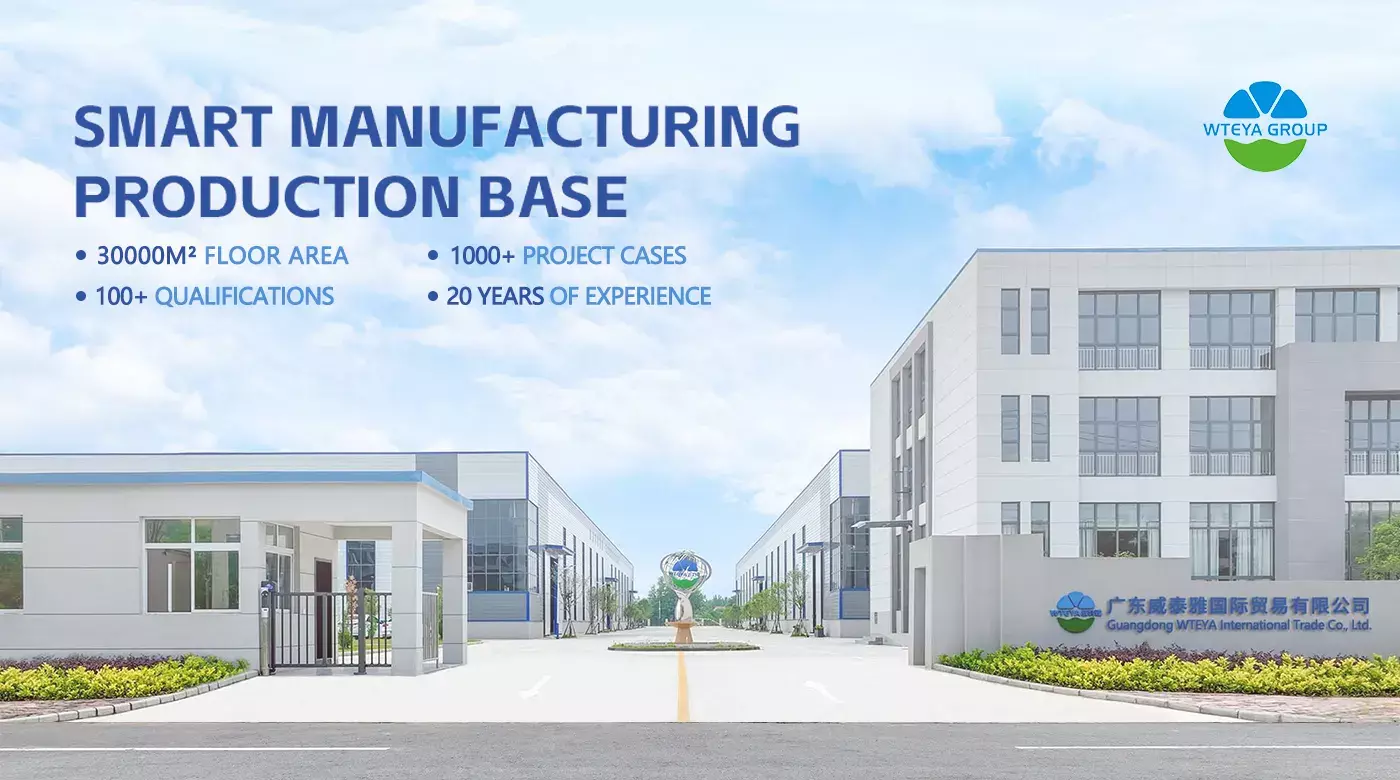
• Nearly 20 years of industry experience
• Trusted by global leaders including Foxconn, Huawei, Ganfeng Lithium, Ronbay Technology
• 100+ success cases worldwide
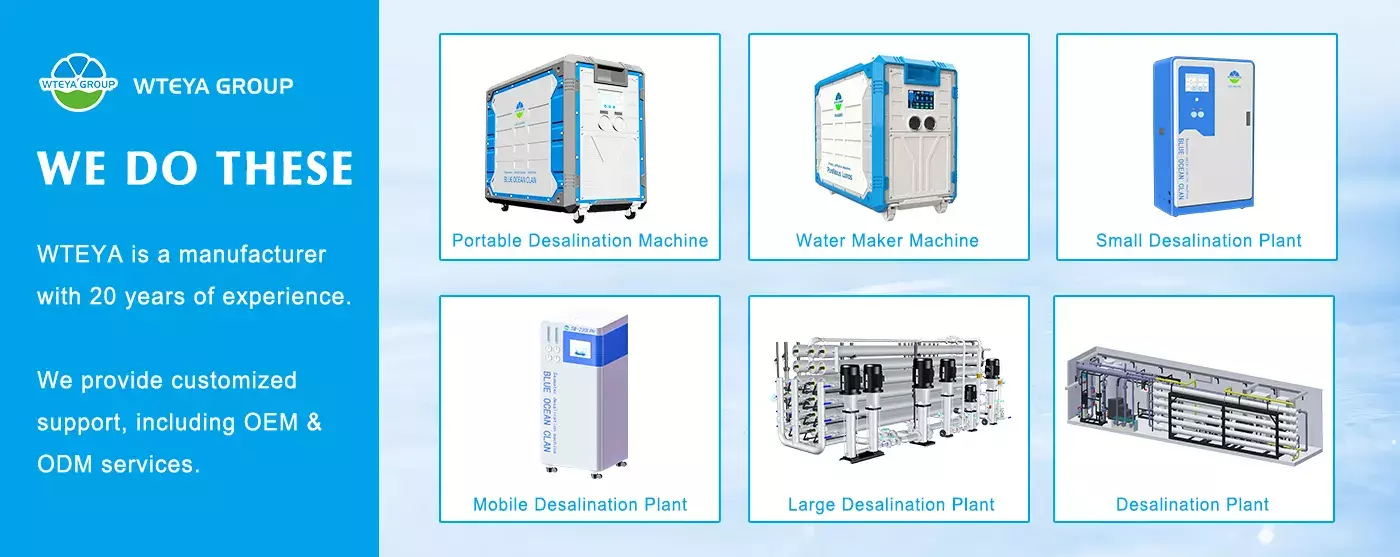
• OEM & ODM customization available
Become a WTEYA Distributor!
We are expanding global partnerships:
• Preferential policies
• Professional training
• Full technical support
Let us help you achieve exceptional water quality and operational sustainability!
📲 WhatsApp: +86-1800 2840 855
📧 Email: info@wteya.com
🌐 Website: www.wteya.com