






7500 T/D Water Reuse Treatment System for Chonghui Semiconductor

7,500 T/D Water Reuse Treatment System for Chonghui Semiconductor
WTEYA delivered a comprehensive wastewater treatment and water reuse system for Jiangmen Chonghui Semiconductor, handling 7,500 m³/d of complex semiconductor wastewater across 8 specialized treatment streams with a 40% water reuse rate (3,000 m³/d recycled).
🤝 Project Overview
Client: Jiangmen Chonghui Semiconductor Co., Ltd.
Project Scale: 7,500 m³/d total wastewater treatment
Reuse Rate: 40% (3,000 m³/d recycled water)
Location: Jiangmen, Guangdong Province, China
Semiconductor manufacturing generates highly complex wastewater streams containing heavy metals, cyanides, silver, fluorides, and organic contaminants. This project required precise separation and specialized treatment for each waste stream to meet both discharge standards and reuse requirements.
💧 Wastewater Segregation Strategy
Following the principle of "clean-muddy separation and graded treatment," the project's wastewater was classified into 8 categories, each with dedicated collection and treatment systems:
- Silver-bearing wastewater — Chemical precipitation for silver recovery
- Nickel rinse water (reuse) — Physicochemical + UF + double-pass RO for reuse
- Cyanide rinse water — Two-stage alkaline chlorination for cyanide destruction
- Rinse water (reuse) — Physicochemical + UF + triple-pass RO for high-quality reuse
- Nickel-bearing wastewater — Two-stage precipitation + ion exchange for compliance
- Cyanide-bearing wastewater — Two-stage alkaline chlorination breakdown
- General wastewater — Cyanide destruction + biochemical + advanced treatment
- Degreasing waste liquid — Physicochemical + biochemical treatment
Each stream is collected, stored, and treated independently to prevent cross-contamination and optimize treatment efficiency.

⚡ System 1: Nickel Rinse Water Reuse System
Capacity: Nickel rinse water (reuse stream)
Treatment Goal: Produce high-quality reuse water
Process Flow:
Nickel rinse water reaction tank → Nickel coagulation tank → Nickel flocculation tank → Nickel sedimentation tank → pH adjustment tank → Intermediate tank → Ultrafiltration (UF) System → 1st Pass RO System → 2nd Pass RO System
The system first removes nickel ions through chemical precipitation, then employs ultrafiltration as a pre-treatment to protect the RO membranes. Double-pass reverse osmosis achieves high-purity water suitable for reuse in the manufacturing process, with nickel concentration reduced to below 0.1 mg/L in the permeate.
🏭 System 2: Cyanide Rinse Water System
Capacity: Cyanide rinse water stream
Treatment Goal: Complete cyanide destruction
Process Flow:
Cyanide rinse water equalization tank → 1st stage pH adjustment → 1st stage cyanide breaking tank → 2nd stage pH adjustment → 2nd stage cyanide breaking tank
Two-stage alkaline chlorination is used to break down cyanide complexes. The first stage breaks complexed cyanides at pH 10-11 using sodium hypochlorite, while the second stage further oxidizes cyanate to nitrogen gas and carbon dioxide at pH 8.5-9, ensuring total cyanide removal to below 0.2 mg/L.

🌍 System 3: Rinse Water Reuse System
Capacity: General rinse water (reuse stream)
Treatment Goal: High-purity reuse water production
Process Flow:
Rinse water equalization tank → pH adjustment tank → Reaction tank → Coagulation tank → Flocculation tank → Sedimentation tank → pH readjustment tank → Intermediate tank → Ultrafiltration System → 1st Pass RO → 2nd Pass RO → 3rd Pass RO → Reuse Water Distribution System
This is the most advanced reuse stream, featuring triple-pass reverse osmosis after ultrafiltration pre-treatment. The three-stage RO system progressively removes dissolved salts, organic compounds, and trace contaminants, producing ultra-pure water with conductivity below 10 μS/cm for direct reuse in semiconductor cleaning processes.
🛡️ System 4: Nickel-Bearing Wastewater System
Capacity: Concentrated nickel wastewater
Treatment Goal: Nickel discharge compliance
Process Flow:
Nickel wastewater equalization tank → Reaction tank → 1st stage pH adjustment → Reaction tank → 1st stage flocculation tank → 1st stage sedimentation tank → 2nd stage coagulation tank → 2nd stage flocculation tank → 2nd stage sedimentation tank → pH readjustment → Intermediate tank → Nickel Ion Exchange System → Nickel detection port
Two-stage chemical precipitation removes the bulk of nickel, followed by a specialized ion exchange system as a polishing step. The nickel ion exchange resin selectively captures residual nickel ions, ensuring effluent nickel concentration remains below 0.05 mg/L, well within regulatory limits.

⚡ System 5: Cyanide-Bearing Wastewater System
Capacity: Concentrated cyanide wastewater
Treatment Goal: Complete cyanide destruction
Process Flow:
Cyanide wastewater equalization tank → 1st stage pH adjustment → 1st stage cyanide breaking → 2nd stage pH adjustment → 2nd stage cyanide breaking
Similar to System 2 but treating more concentrated cyanide waste. The two-stage alkaline chlorination process ensures complete oxidation of both free and complexed cyanides, with final effluent cyanide levels below 0.2 mg/L.
🏭 System 6: General Wastewater System
Capacity: Combined general wastewater
Treatment Goal: Discharge compliance after treatment
Process Flow:
General wastewater equalization tank → 1st stage cyanide breaking tank → (subsequent biochemical treatment and advanced treatment)
General wastewater may contain trace cyanides and organic contaminants. After initial cyanide destruction, the water undergoes biological treatment using MBR (Membrane Bioreactor) technology followed by advanced treatment, including activated carbon adsorption or ozone oxidation, to meet discharge standards for COD, ammonia nitrogen, and phosphorus.

🌍 System 7: Silver-Bearing Wastewater System
Capacity: Silver-containing wastewater
Treatment Goal: Silver recovery and discharge compliance
Process Flow:
Silver-bearing wastewater collection → Physicochemical treatment (chemical precipitation for silver recovery)
Silver is a valuable metal in semiconductor manufacturing. This system uses selective chemical precipitation to recover silver as silver chloride (AgCl) or metallic silver, which can be refined and sold. The treated effluent meets silver discharge standards of below 0.1 mg/L.
💧 System 8: Degreasing Waste Liquid System
Capacity: Concentrated degreasing waste
Treatment Goal: Oil removal and discharge compliance
Process Flow:
Degreasing waste collection → Physicochemical treatment (oil separation, coagulation) → Biochemical treatment
Degreasing waste contains high concentrations of oils, surfactants, and organic solvents. The system first uses physical-chemical methods (oil-water separation, emulsion breaking, coagulation) to remove free and emulsified oils, followed by biological treatment using MBR to degrade residual organic compounds, achieving COD below 80 mg/L.

⚡ Technical Highlights
8-Stream Segregation: Independent collection and treatment for each wastewater type prevents cross-contamination and enables optimal treatment conditions.
Multi-Stage RO Reuse: Triple-pass RO for rinse water and double-pass RO for nickel rinse water achieve high-purity reuse water, reducing fresh water consumption by 3,000 m³/d.
Ion Exchange Polishing: Selective nickel ion exchange ensures ultra-low nickel discharge while enabling potential nickel recovery.
Silver Recovery: Chemical precipitation captures valuable silver for recycling, providing economic and environmental benefits.
MBR Technology: Membrane bioreactor systems in general and degreasing wastewater treatment achieve superior COD removal and produce crystal-clear effluent.
40% Water Reuse Rate: The 3,000 m³/d of recycled water significantly reduces the facility's fresh water intake and wastewater discharge, supporting sustainable semiconductor manufacturing.
🏭 About WTEYA
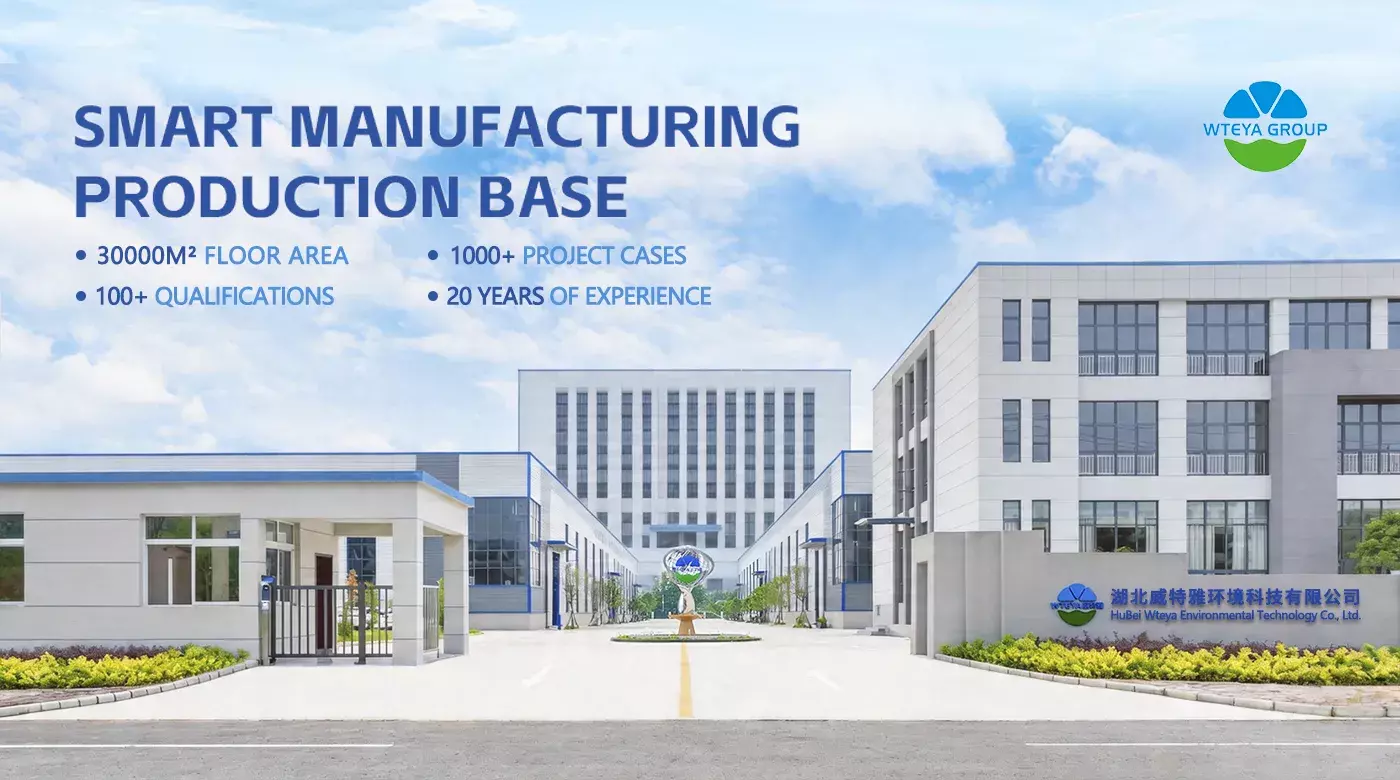
WTEYA (Guangdong WTEYA Environmental Technology Co., Ltd.) has been dedicated to industrial wastewater treatment for nearly 20 years. With a manufacturing base of 30,000 m², 500+ employees, and 200+ patents, WTEYA serves clients in the semiconductor, electroplating, lithium battery, petrochemical, and pharmaceutical industries.
Our semiconductor wastewater treatment solutions include heavy metal removal, cyanide destruction, fluoride treatment, water reuse systems, and zero liquid discharge (ZLD) systems. We provide OEM and ODM services for clients worldwide, with equipment certified to ISO9001, ISO14001, CE, and RoHS standards.

Frequently Asked Questions
Q: How to choose the right solution?
A: Consider your industry, capacity requirements, and environmental regulations. Contact WTEYA for expert guidance.
Q: What is the typical project timeline?
A: Project timelines vary based on capacity and complexity. WTEYA provides detailed project schedules during consultation.
Ready to Start Your Project?
Every day of delay costs money. Our rapid-response team can deliver a preliminary solution design within 48 hours.
Send us your wastewater data and let's start building your custom system today.
📲 WhatsApp: +86-1800 2840 855
📧 Email: info@wteya.com
🌐 Website: www.wteya.com