







MVR Evaporator Automation: What Can Be Automated?
MVR Evaporator Automation: What Can Be Automated?
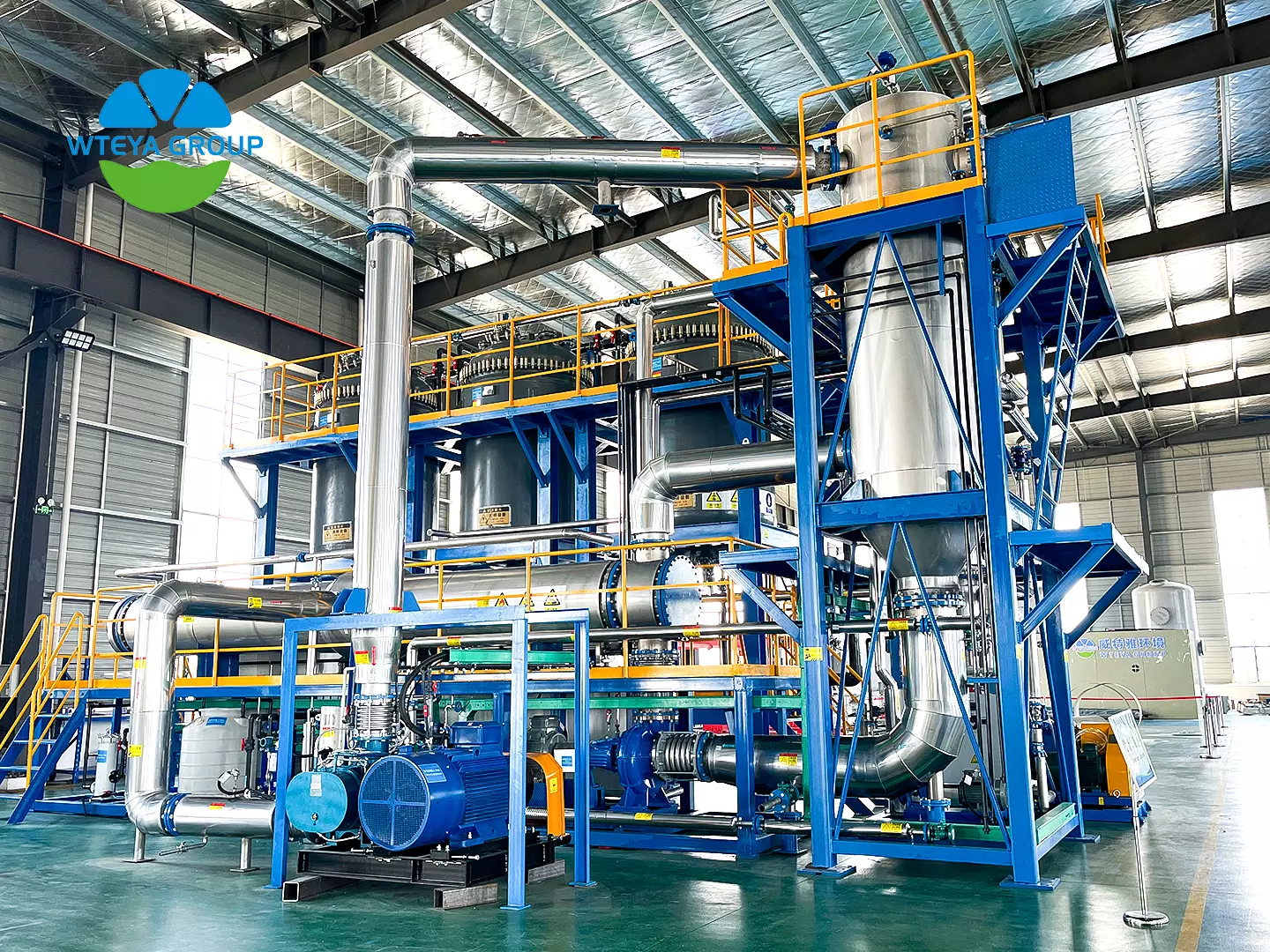
An MVR evaporator is the most heavily automated type of evaporation equipment on the market today. The standard configuration is a PLC with a touchscreen HMI or a SCADA workstation, and it is normally capable of one-button start-up, unattended running and automatic shutdown once the batch or the shift ends. In steady operation a single operator can look after two or three systems at the same time.
The practical question for most buyers is not whether an MVR evaporator can be automated, but which functions are worth automating for their duty. Below is a breakdown of what is standard, what is optional, and what should be written into the supply contract.
⚙️ What Runs Automatically as Standard
Five control functions cover the majority of daily operation, and all of them are normally included:
Feed flow control. The feed pump is modulated against the separator liquid level, so the evaporator holds a stable inventory instead of relying on an operator to open a valve.
Discharge concentration control. An online density meter or refractometer feeds back to the concentrate pump, holding the discharge at the set total solids rather than at a fixed flow.
Vacuum control. The vacuum pump runs on a variable frequency drive to hold the target evaporating pressure, which keeps boiling temperature stable and protects product quality.
Compressor protection. Vibration, discharge temperature and motor current are monitored continuously; any of them exceeding its limit triggers load reduction or a controlled stop, which is what prevents surge damage to the impeller.
Interlock logic. Low level stops the feed pump, over-temperature cuts the heating source, and loss of cooling water stops the compressor. These interlocks are what allow the plant to sit unattended overnight.
🔧 Cleaning and Data Functions
Cleaning is the next tier. An automatic CIP sequence can be scheduled by cycle count or triggered by a rise in differential pressure, running the caustic and acid steps, rinse and neutralisation without manual valve work. Systems that include this typically extend the interval between manual interventions from days to weeks.
Data functions matter more than they appear at the quotation stage. Temperature, pressure, power draw and distillate flow are logged and compiled into shift or daily reports. With a 4G, 5G or Ethernet link the same data reaches a cloud platform, and alarms can be pushed to a phone app or by SMS. Remote alarm delivery is what makes genuine unmanned operation practical — without it, "automatic" only means nobody has to stand at the panel.
💡 Optimisation Layer
Beyond sequence control, higher-tier systems adjust compressor speed and feed rate against real-time load so that the unit stays near its lowest specific energy point. Suppliers report a further 5% to 10% energy saving from this optimisation layer compared with fixed-speed operation at part load.
The same trend data can be used to build a fouling model: as the heat transfer coefficient drifts, the system raises an early warning that the exchanger is due for cleaning, rather than waiting for a pressure or capacity alarm. This is the difference between cleaning on condition and cleaning after performance has already fallen.
❓ What to Specify Before You Buy
Four points are worth confirming in writing, because they decide how much of the automation you can actually use:
1. PLC brand and support — Siemens, ABB or an equivalent mainstream platform, so that spares and local service exist where the plant is installed.
2. Remote access — whether the cloud platform and app are included, and whether the vendor can dial in for diagnostics.
3. Reporting — automatic shift and daily reports, exportable, not only a live screen.
4. Restart behaviour after power loss — whether the sequence resumes automatically or requires an operator to acknowledge and restart step by step.
It is also worth being clear about what high automation changes. It does not remove the need for people; it moves the skill requirement from valve turning to system maintenance. The contract should therefore include operator training and a warranty on the control system itself, so that faults in the automation are covered the same way as faults in the mechanical equipment.
📚 Related FAQs
How Long Does an MVR Evaporator Last?
What Is the Delivery Time for an MVR Evaporator?
MVR Evaporator Maintenance: A Practical Service Checklist
Five Ways to Cut MVR Evaporator Operating Costs
Can You Rent an MVR Evaporator Instead of Buying One?
Schedule a video call with our engineers to explore your options.
📲 WhatsApp: +86-1800 2840 855
📧 Email: info@wteya.com
🌐 Website: www.wteya.com
Previous: Desalination Plant Construction Timeline: Phase by Phase
Next: No More